
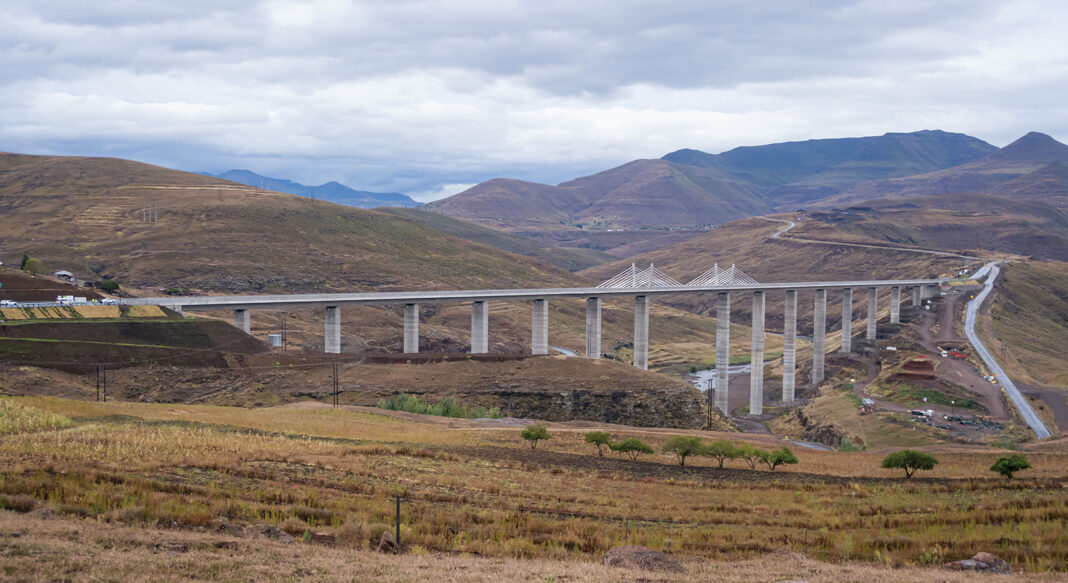

Residents of Malingoaneng in Mokhotlong have called on the governments of Lesotho and South Africa, as well as the Lesotho Highlands Development Authority (LHDA), to ensure that the Lesotho Highlands Water Project (LHWP) delivers tangible benefits to the communities living closest to its operations.
The community’s concerns were raised during the launch of the second Polihali Tunnel Boring Machine (TBM) this week, an event marking a significant milestone in Phase II of the multi-billion maloti water project. While the project is widely regarded as a major engineering feat designed to supply water to South Africa and generate revenue for Lesotho, local residents say they fear being sidelined from its benefits.
Member of Parliament for Malingoaneng, Monethi Ramakalima, voiced the frustrations of his constituents, stressing that while large volumes of water will be transferred to South Africa, local communities still struggle with access to clean and reliable water.
“We hope this project will not bypass us,” Ramakalima said.
He noted that they want to see Basotho benefiting from the water that flows through their land, not just watch it serve communities across the border.
Ramakalima recalled that as far back as 2012, residents were assured that the first phase of the project would improve their livelihoods. More than a decade later, many say those promises remain unfulfilled.
He indicated that Malingoaneng is an area rich in grazing land and agriculture, and that earlier assurances included compensation and improved living conditions tied to the project’s development.
Instead, many families are now struggling to sustain their livestock due to reduced grazing areas and environmental disruptions linked to construction activities.
“Animals are stranded with limited grazing land. We trust that those responsible have plans in place to ensure that livelihoods, especially for farmers, are protected moving forward,” Ramakalima said.
He further highlighted that ongoing road construction in the constituency has negatively affected water sources, compounding existing challenges.
However, despite these issues, communities continue to hold on to the LHDA’s promise that the project would ultimately improve their lives.
Principal Chief of Malingoaneng, Matšohlo Sekonyela, echoed these concerns but also acknowledged some positive changes brought about by the project.
He said while development has improved certain aspects of life in Mokhotlong, it is essential that communities directly benefit from the natural resources they help safeguard.
“We do not want to see water benefiting South Africa while communities here are left behind. This water comes from our mountains, which we protect. Every affected family should benefit, because water is life,” he noted.
Sekonyela also urged the LHDA to take community grievances seriously, particularly in its oversight of contractors, to ensure that development is inclusive and responsible.
He emphasised that social development and fair compensation must remain central to the project’s implementation.
Despite ongoing concerns, some residents acknowledged improvements linked to the project. Speaking on behalf of the community, Mosa Lengoasa said employment opportunities, although initially limited to unskilled labour, have since evolved into more meaningful prospects.
“Some workers who started without skills have now gained experience and certificates, which improves their future prospects,” Lengoasa said.
He also pointed to improved road infrastructure, which has eased travel and created new business opportunities, including transport services for workers commuting to and from construction sites.
Meanwhile, South Africa’s Minister of Water and Sanitation, Pemmy Majodina, described the TBM launch as a critical step toward ensuring water security for Gauteng, the country’s economic hub.
She noted that the province faces increasing pressure due to rapid population growth despite its small geographic size.
Majodina explained that the TBM will excavate the tunnel through challenging terrain, operating deep beneath mountains rising over 3,000 metres, with rock cover exceeding 500 metres and in some areas reaching up to 1,000 metres.
“This is not just excavation; it is precision under pressure,” she pointed out.
Majodina reported that more than 600 metres of tunnel have already been excavated from the Katse side, and over 380 metres from Polihali. With both tunnel boring machines now operational, excavation is progressing simultaneously from both ends.
“This is momentum. This is delivery in action,” she added.
On his part, the Minister of Natural Resources, Mohlomi Moleko, highlighted the long-term economic impact of the LHWP.
He noted that over its 40-year history, the project has introduced advanced engineering technologies and infrastructure to the region.
Phase II alone has created over 17,000 jobs, bringing the total number of jobs generated by the project to more than 33,000. The water transfer tunnel component has contributed over 2,000 jobs to that figure.
Moleko also outlined the project’s contribution to enterprise development, with procurement expenditure reaching M153 million for local enterprises around Katse and Polihali, and M938 million for businesses across Lesotho. South African enterprises, particularly black-owned companies, have also benefited from procurement opportunities linked to the project.
He stated that these investments have helped small and medium-sized businesses grow, diversify into new sectors, and strengthen skills in areas such as contract management, financial planning, and competitive tendering.
However, Moleko stressed that economic gains must be matched by efforts to restore livelihoods and improve social conditions for affected communities.
“We strongly urge the LHDA to prioritise livelihood restoration and social development. This is a key obligation under the treaty, and we must ensure that no one is left behind,” he added.
As construction continues, the message from Malingoaneng residents remains clear: while they recognise the national and regional importance of the LHWP, they expect the project to deliver meaningful and lasting benefits to those living at its source.


