

By Likeleli Monyamane
The food industry has provided Basotho women with an excellent opportunity for self-employment and income generation. Historically, Basotho women have played a significant role in the food production value chain. Firstly, as subsistence farmers engaged in farming activities to take care of their families’ immediate needs. Secondly, as business owners (in the informal and formal sectors) that cater for individuals who need to buy cooked meals daily and who provide food in school feeding programs, and businesses with catering services.
There are a few factors that make the food industry very attractive to women. Firstly, there are low barriers to entry into the industry. Secondly, the low cost of capital (in comparison to other sectors). Lastly, the accessibility of land in Lesotho. Indeed, there is a great opportunity for the food industry to provide Basotho women with the economic empowerment they so need. However, the way the industry is currently structured makes it difficult for women to derive the full potential of the sector’s value.
Some of the disadvantages in how the industry is structured are as follows:
- Farming is primarily done on a subsistence basis in Lesotho, which leaves the consumption market with a gap filled by imports from countries like South Africa.
- Most businesses are informal, unregistered, and run as owner-managed businesses that don’t provide employment outside of the women owners or provide very little work. This means the entrepreneurial activity has little impact on the economy.
- There is a lack of innovation across the value chain, with farmers employing traditional farming methods in food production and entrepreneurs using conventional distribution channels to reach customers.
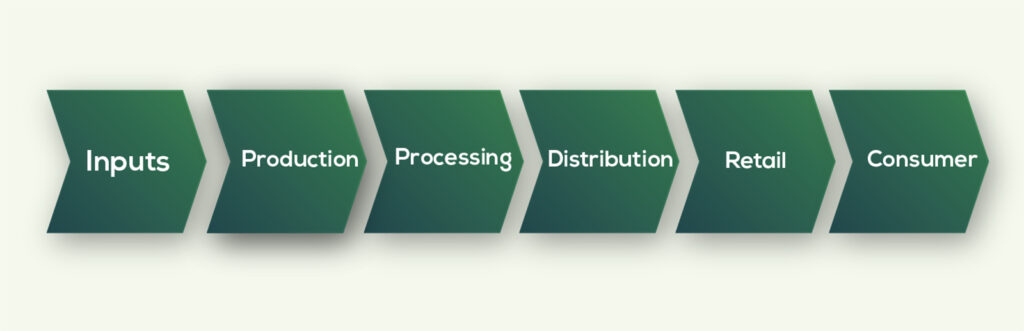
- Lastly, activity in the sector is concentrated on specific areas of the food production value chain and is completely missing from others. This means that agricultural inputs usually must be sourced outside of Lesotho, and the lack of food processing activity limits the value derived from the value chain.
In what ways can technology transform the food sector?
One of the ways in which the industry can be transformed is by using technology. For example, a few months ago, a young man named Thato Rammoko launched Lunchbox. This food technology company provides restaurants/catering businesses (the supply side) access to clients who may not be willing to walk into their establishments daily to purchase a meal. On the demand side, it provides customers with a convenient way to order food from multiple establishments. It also has the food delivered to the customer’s doorstep.
As impressive as it is, Lunchbox only provides a solution for one part of the value chain – the distribution of ready-made food. This leaves many parts of the value chain’s needs unaddressed. In other African countries, there are many different ways in which technology has been used to provide solutions to the plethora of challenges in other parts of the value chain. Examples of companies that offer some of these solutions are:
- Agriprotein (South African) turns food waste into proteins fed to chicken and fish.
- 3Dimo (developed by a Mosotho woman) which provides a platform for investors in agricultural commodities; and
- Farmcrowdy (Nigerian) provides access to finance for various stakeholders in the food value chain.
Suppose Basotho can develop solutions such as these. In that case, they will benefit women entrepreneurs – as the most significant participants in the industry – the most. Furthermore, as the majority of participants in the sector, Basotho women are better positioned to be the ones who develop these much-needed technologies.
*The food production value chain
The value of the Food Technology opportunity
The value of technology in any sector cannot be overemphasized, and the food technology sector is no exception. According to Emergen Research, the global Food technology market is projected to reach a value of $342 Billion by 2027. The high growth is attributed to increased penetration of the Internet and smartphones in developing economies. 45,4% of this market is dominated by the online food delivery segment, while the rest is shared between online grocery delivery and Over-The-Top (OTT) convenience services. In the past two years of the Covid19 pandemic, the need for food technology companies has increased significantly, and a few African food technology companies have emerged as a result. However, African countries have still not done enough to tap into this big technology opportunity.
Companies like Kunye, a Kenyan on-demand food service company, have raised $1 million in pre-seed funding within six months of launching in August 2021. This confirms reports that the sector has space for big dominant western companies and small and medium-sized African companies that are willing to take up the opportunity. I dare Basotho women entrepreneurs not to be left behind.