
By Staff Reporter
Winter is finally here. It is that time of the year when farmers, both smallholder and commercial, work in earnest to harvest maize and sorghum, the two major staple foods of Basotho.
Apart from serving as food for humans, the harvested crops, especially maize, is the most common feed for livestock. As well as containing vital nutrients, the starch in maize also provides cows with the energy they need to produce milk and/or meat.
To the average household, any surplus harvest is usually sold to make a small profit, but not after saving some to plant in the next summer season. This has been the practice since time immemorial.
And it is not difficult to tell that it is harvest time. Fields are invariably covered with brown, dried up maize or sorghum stalks.
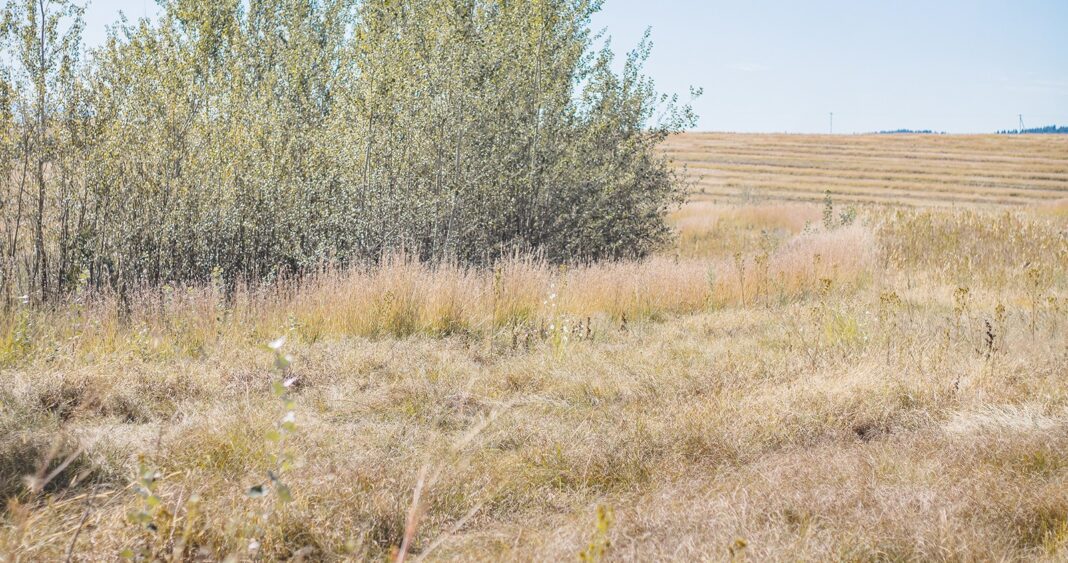
However, when one approaches the small remote village of Lihlabeng Ha Foka in the Leribe district, all they see are fields covered in thatching grass, a sign of a failed cropping season or none at all.
One of the villagers, who is a victim of a failed summer cropping, ‘Malebohang Mofooatsana, has what she believes is an explanation.
The subsistence farmer’s two-acre field is water-logged.
What catches the eye is an assortment of healthy looking weeds. And then there is the sparse ‘population’ of malnourished brown maize stalks.
“We had very poor harvests, if you can call them harvests that is. A very huge portion of people here did not plant because the fertilisers that the government promised to give us at subsidised prices, never came,” Mofooatsana said.
She noted that now everyone could afford to buy seeds and fertilizers at farm shops in Ficksburg, South Africa.
“My husband forked out M1000 to purchase 10 kilogrammes of seeds in Ficksburg. I can’t remember the brand name of the seeds, but it is Kalahari if my memory serves me well. We were told it is high in yield.
“We also purchased fertilisers, but we have nothing to show for it. There is nothing to harvest. All our money and time gone to waste,” Mofooatsana said.
In 2022/2023, La Nina was at its peak in Lesotho, like the rest of Southern Africa. This is a weather pattern characterised by torrential rains and widespread flooding. The result was waterlogged fields in many parts of the country. Crops and vegetables could not thrive in these conditions.
However, Mofooatsana is hopeful that fortunes will change for the better in the next summer cropping season, but she cringes at the prospect of spending hard-earned cash on seeds and fertilisers.
“We are forced to purchase new seeds every year. This is because the grains we put aside to use as seeds in the following season always disappoint us. They do not produce much, sometimes nothing at all.
“Buying seeds each year is a huge financial burden. But we have to find means to do so otherwise we won’t be able to feed our families,” she noted.
Her sentiments are shared by another former maize farmer in the same village, Thuso Molapo, who says he has given up on farming because maize seeds are priced beyond the reach of the poor.
Molapo now spends most of his time at Maputsoe where he works as a taxi driver.
“I was struggling to buy new seeds every year. They require too much investment such as government-supplied fertilizers whose availability is not consistent anyway. Only a few farmers with the financial muscle were able to reap the rewards of the hybrid maize.
“I had no choice but to abandon farming. I am now preparing to switch to vegetable production and I hope to save enough money start over again,” Molapo said.
Lihlabeng farmers are among thousands of subsistence farmers in Lesotho who grapple with the price of seeds, genetically modified seeds, to be precise. They are not even aware of the concept of genetic modification. They call them ‘improved seeds’. This is a challenge faced by the country’s subsistence farmers, according to experts.
Smallholder farmers in developing nations are fuelling a steady expansion in the global cultivation of genetically modified (GM) crops, also referred to as hybrids, resulting in significant economic and environmental gains, according to new analyses.
According to international open access journal Science Alliance, some 19 developing nations – including India, Pakistan, Paraguay, Brazil, Bolivia, Sudan, Mexico, Colombia, Chile, Vietnam, Philippines, Honduras and Bangladesh – now account for 53 percent of the world’s acreage in GM crops.
Five industrial nations – led by the United States – also grow GM crops, and 43 countries, including 26 in the European Union, formally import biotech crops for food, feed and processing.
Science Alliance says in total, 67 of the world’s 195 countries have adopted biotech crops. It’s the fastest adopted crop technology in the world, achieving a 112-fold increase since its commercial introduction in 1996. Some 17 million farmers planted GM crops in 2017.
Their proponents say GM crops increase yield. The technology has allowed farmers to grow more without needing to use additional land, reducing pressure on typically high biodiverse land to be converted for agricultural production.
In the 20 plus years since their adoption, GM crops have produced 213 million tonnes of soybeans, 405 million tonnes of maize, 27.5 million tonnes of cotton lint and 11.6 million tonnes of canola.
On the other hand, genetically modified seeds are believed to a problem for farmers, as they cause contamination and economic loss. Many plants are pollinated by insects, birds or wind, allowing pollen from a GMO plant to move to neighbouring fields or into the wild. This ‘genetic drift’ illustrates the enormous difficulty in containing GMO technology, the organisations warns.
It adds that the negative impacts of genetically modified crops on farmers have triggered environmental concerns include: the risk of outcrossing, where genes from GMO foods pass into wild plants and other crops; a negative impact on insects and other species; and reduction in other plant types, leading to a loss of biodiversity.
Generally, GMO crops are also frowned upon for concerns that involve allergies, cancer, and environmental issues – all of which may affect the consumer.
Lesotho has been experiencing a major food security crisis since 2012. The UN’s Food and Agriculture Organisation and World Food Programme estimates of 2009 and 2016, respectively, put the figure of people vulnerable to food insecurity in the country at 549 000 constituting about 30 per cent of the total population.
This is exacerbated by poor farming practices and continuous drought. The country is vulnerable to climatic conditions that affect harvest yields and cause great loss to livestock. As a result of poor farming methods and climatic conditions, Lesotho is one of the many developing countries that are dependent on food-aid and imports. In most cases, food aid often involves dumping of surplus food products into the poor countries by the rich ones.
Commenting on the impacts of genetically modified seeds on subsistence farmers,
Lesotho National Farmers Union programmes manager Khotso Lepheana says genetically modified seeds have a positive impact in terms of the yield as they have been modified to be adaptable to specific situations and conditions in the farming areas.
“However, in terms of sustainability of the farm in production, the genetically modified seeds varieties are expensive and in most cases are not affordable by majority of the smallholder farmers,” he pointed out.
Lepheana further explained that while they are not for seed production or multiplication, farmers normally treat GMOs like indigenous seeds which can be reseeded. But then, the consequences are poor harvest as the genetically modified seeds are not for reseeding but once off planting.
“Yes, some farmers complain that the genetically modified seeds are expensive and majority of the smallholders cannot afford. In terms of the benefits from the genetically modified seeds, both the farmers and the seed manufacturers do benefit. However, the farmers are at the receiving end where they are compelled to buy the seeds due to lack of indigenous ones.
He noted that since the genetically modified seeds are not for reseeding, farmers have to buy new seeds every planting season.
“That cash-outflow from the farm every season means a negative effect on the financial sustainability or economy of the smallholder farmers. While the majority of the farmers may wish to produce food for their families and market supply, the lack of finance forces them to use absolute technologies and low-quality inputs with little or no returns.”
According to local independent agricultural consultant, Pulumo Mofokeng, the fact that poor farmers cannot afford GMs which require costly fertilisers to thrive, renders their use unsustainable, compared to open pollinated seeds.
“These crops have negative impacts on farmers; they are expensive and take more from farmers than they give. They are also unhealthy since they are not organic and have been subjected to high technology of inorganic substances like chemicals,” Mofokeng said.
He also noted that the government spends a lot of money to procure these seeds but the returns are far below the investment. This means it is the manufacturers of the hybrid seeds that become richer at the expense of poor farmers.
He however added that this notwithstanding, poor crop performance could be a result of other factors such as poor management.
“In the light of this, it is safe to say subsistence farmers do not have a bright future with genetically modified seeds. Since the introduction of these seeds, it is only a few farmers with the financial muscle who have consistently made profits. Their management is demanding since they require synthetic fertilisers, pesticides and herbicides. The high prices of these chemicals means they are out of poor farmers’ reach. Not to mention that they are not adapted to our environment and climate.”
Mofokeng further postulated that if Lesotho wants to see a turnaround in farming and, consequently, food security in line with the United Nations’ Sustainable Development Goals (SDG), it needs to intensify the production of affordable open pollinated seeds which can be subjected to selection and replanted.
The first SDG aims to eradicate extreme poverty for all people everywhere while the second goal aims to end all forms of hunger, achieve food security and improved nutrition and promote sustainable agriculture.
The UN plans to achieve these by 2030 through ensuring that all people have access to sufficient and nutritious food all year round through the implementation of three strategies. These are; promotion of sustainable agricultural practices, supporting small-scale farmers to ensure equitable access to land, technology and markets, and ensuring international cooperation in investment, infrastructure and technology to improve agricultural productivity.
This publication could not get the ministry of agriculture, food security and nutrition’s position on hybrid seeds. Its information officer, Lereko Masupha, said he had referred our questions to the ministry’s research department but had not reverted back to us at the time of going to print.
However, agricultural extension officers revealed that hybrid seeds were used more in the country’s lowlands than in the highlands.
Since the soil is a more fertile in the highlands and does not require synthetic fertilizers, farmers use three major varieties of open pollinated maize seeds, namely Nelson’s Choice, ZM 521 and ZM 523.
In the lowlands where the use of genetically modified is widespread, the most common varieties are DKC 7372, DKC 7420, SNk 2778, AFG 4410, PAN 12, PHB 3442, PAN 3m-05, and 4m 19.
The government has since the 1980s encouraged farmers to plant hybrid crops because they are high in yield and can withstand adverse weather. However, they require heavy doses of fertilizers, as well as herbicides and pesticides. These chemicals are harmful when ingested, as some are carcinogenic. This is why the government is now encouraging people to go back to practising organic farming.