
‘Mantšali Phakoana
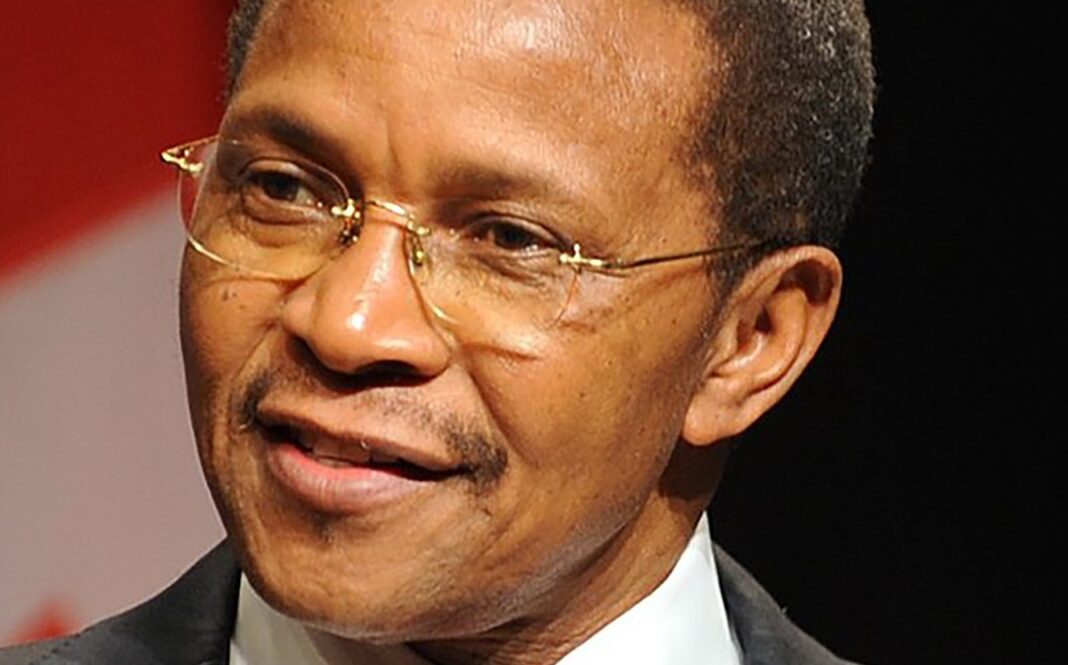
The South African Development Community (SADC) oversight committee chairperson led by former Tanzania president Jakaya Mrisho Kikwete has applauded the government and opposition for reaching an amicable agreement to ensure success of national reforms.
Since 2016, Lesotho has been pursuing a major reform programme that seeks to fundamentally change critical aspects of the politico-legal system in the country: the judiciary, legislature, security sector, public service and the media, to mention just a few.
This effort initiated by the SADC seeks to address the cyclical political instability in the country.
During the closing of the committee’s consultation meetings with various stakeholders on Monday this week, Kikwete said the committee will report back on reforms’ progress during the August 17 summit of SADC leaders to be held in Luanda, Angola.
This was the second visit of the panel of the SADC elders, following the first one in February 2023.
The team consisted of two members of the SADC Panel of Elders, Kikwete and former vice-president of the Republic of Mauritius Paramasivum Pillay Vyapoory, as well as the SADC secretariat officials and support staff.Top of Form
Bottom of Form
Top of Form
Bottom of Form
Kikwete said the committee’s deployment in Lesotho was a follow-up on the country’s progress made on reforms, particularly the 11th Amendment to the Constitution also known as Omnibus Bill, which he said was commendable.
He indicated that their first visit in February was meant to gain details of the government’s roadmap and plan for implementing the reforms.
Speaking on the margins of a meeting with the panel on Friday, leader of opposition, Mathibeli Mokhothu, said they updated the committee on the recent agreement signed with the government to enable passage of the Omnibus Bill.
Mokhothu indicated that as opposition they were still hopeful that the government would implement their agreement and pass the Bill as it was when the life of the last 1oth parliament ended last year.
He insisted the opposition’s major argument had been with the government’s proposal to ‘dismember’ the Bill before it was resuscitated and passed.
“That would have meant that the government was starting the reforms process from the beginning.
“We did not mind if the Bill was revisited after it had been resuscitated at the stage it was when the 10th parliament ceased.
“After the Bill has been resuscitated, passed and split into three parts, it will still be subject to amendments,” Mokhothu said.
In their recent agreement signed last month, both government and opposition had committed to expedite the passing of the Omnibus Bill.
They also committed to consult their respective political parties and urge them to support the Bill to comply with the requirements of the constitution of Lesotho.
They further pledged to support the outstanding elements of the national reforms post passing of the Omnibus Bill by National Assembly.
“We commit to cooperate with all stakeholders in processing and passing of the Bill and other related legislative instruments.
“In the principle underpinning the reforms process, we shall remove all obstacles and impediments that have a potential to derail or delay the passing of the 10th Amendment to the Constitutional Bill,” reads the agreement.
On his part, the minister of foreign affairs and international relations, Lejone Mpotjoane, said the SADC panel had come to ensure government’s commitment to implement the reforms.
He stated that this was a follow-up visit after the government had on July 21 reported to SADC Lesotho’s progress on reforms.
“The team was here to meet with other stakeholders to get the feel of the progress after the government’s report,” Mpotjoane noted.
The SADC panel arrived in Lesotho on July 26 and departed on July 31. It met with prime minister, Samuel Matekane, King Letsie III, opposition parties, parties outside parliament, Attorney General Rapelang Motsieloa, the National Reforms Transitional Office, Speaker of the National Assembly Tlohang Sekhamane and President of Senate ‘Mamonaheng Mokitimi, among others.
The reforms – meant to usher in a new era of stability in Lesotho – are the result of years of discussions among political parties, civil society and other role players, mediated by SADC.
All the major parties in Parliament signed a pledge in May 2022 to pass the Omnibus Constitutional Bill by the end of June that year. It sought to amend key provisions regarding political parties, floor-crossing in Parliament, the appointment of senior officials and the role of the prime minister. This was to ensure the new legislation could go through before Parliament was dissolved 90 days before the elections.
However, the 11th Amendment to the Constitution Bill 2022 and the National Assembly Electoral Bill were not passed in time. Disagreements over aspects of the bill, notably between the Senate and Parliament, held up progress.
Following pressure from several quarters, including SADC, Lesotho’s Council of State recommended that Parliament be reconvened for an urgent session to pass the bill before the elections. It advised that King Letsie III declare a state of emergency – the only legal way to recall Parliament – to prepare for elections.
The King followed the recommendation of the Council and then Prime Minister Moeketsi Majoro, who said that failure to pass the bills threatened Lesotho’s stability. The country’s relationship with key partners and SADC were also at stake, he said. The state of emergency, on August 16 2002, came conveniently just as SADC was meeting for its annual summit in Kinshasa.
According to the Institute for Security Studies, SADC sees the Lesotho reforms as a significant achievement and an example of how it can intervene to help countries stabilise their politics for the good of citizens.
SADC’s current involvement dates back to 2014, when it stepped in to quell dissent and violence following the attempted ousting of then prime minister Thomas Thabane. It also sent a small military intervention force in 2017 to ensure stability.
However, the Constitutional Court declared the reform bills unlawful following a successful challenge brought by a former journalist and the Law Society of Lesotho on September 12 2002. Legal experts largely agree with the court’s argument that the state of emergency wasn’t justified.
The nullification of the reconvening of Parliament and the passing of the Omnibus bill was a blow to those who worked hard to see them passed, including the European Union and the United Nations Development Programme, which financed much of the National Reforms Authority’s work since its establishment in 2019.
One of the major issues had been the mixed proportional electoral system that led to unstable coalitions and acrimony within political parties. The arrangement has resulted in infighting and floor-crossing rather than a representation of voters.
In addition to limiting floor-crossing, the reforms would mean that a prime minister can only be removed by a two-thirds majority. This would reduce the potential for instability – as happened earlier this year – when the prime minister lost control of his party and faced repeated calls for removal from within his own ranks.
The new Bill could also limit the use of politics for individual gain and root out nepotism, as appointments of ambassadors and parastatal heads, for example, would be by independent commissions rather than Parliament.
A proposal is also on the table to make the king the commander of the armed forces.
The king rather than Parliament, would make key appointments in the army and police, reducing the politicisation of the security forces.