
The government is pressing ahead with the Sustainable Irrigated Horticulture, Health and Business Development Programme (SIHHBDP), a key initiative targeting agriculture, healthcare and business development.
With a budget allocation of M221 million approved for the current financial year, the programme is making progress in implementing key interventions across agriculture, healthcare and private sector development.
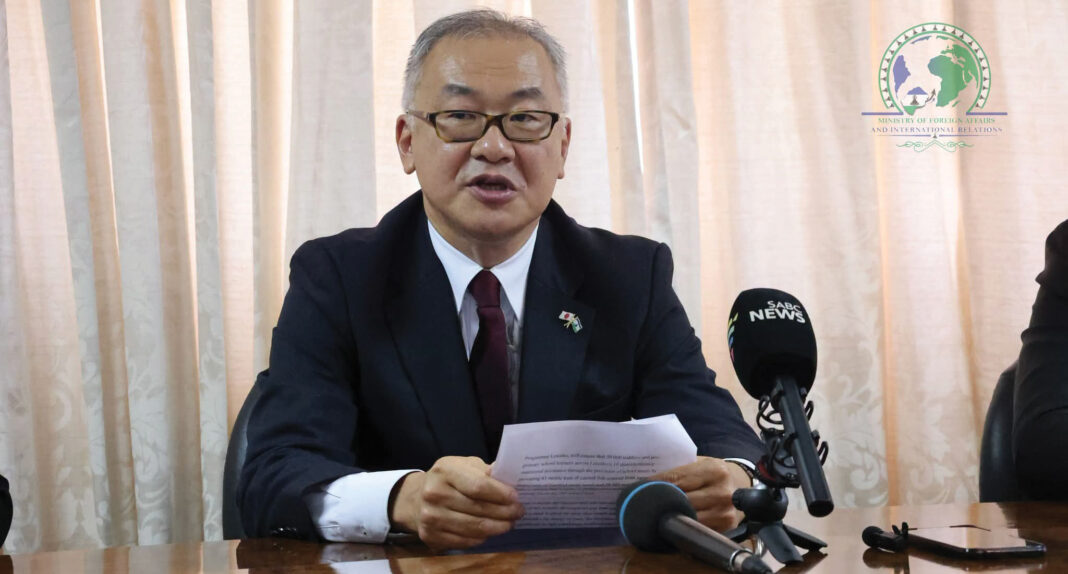
Acting Deputy Chief Executive Officer of the SIHHBDP, Dr Basia Bless this week said the programme was established to carry forward the socio-economic development agenda initially agreed upon by the governments of Lesotho and the United States of America.
To this end, the government established SIHHBDP as a Project Implementation Unit under the Ministry of Finance and Development Planning to ensure the continuation of the programme.
Bless said the initiative had largely retained the structure of the previous Millennium Challenge Account (MCA) Compact after its termination.
“The programme still maintains much of the same structure as the one that was packaged under the MCA. However, following the termination of the MCA, we reviewed the original document that guided the project,” he noted.
The original programme was built around three major components: Commercial Irrigated Horticulture, Health Systems Strengthening and Business Development.
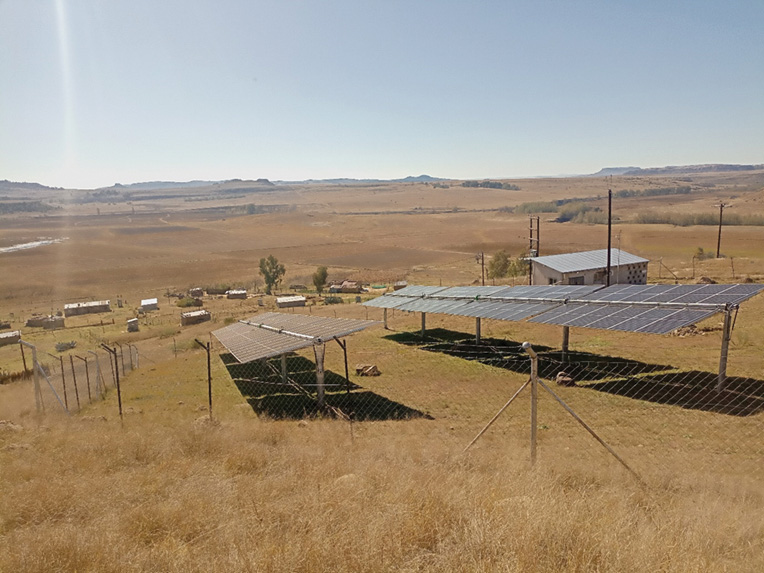
Under the agriculture component, the programme focuses on the irrigated horticulture sub-sector, supporting irrigation schemes as well as land and water resource management initiatives.
Through private sector development, the programme seeks to create an enabling business environment that allows enterprises to grow.
Health Systems Strengthening (HSS) Activity Manager, ‘Mapenane Lesaoana, outlined that the component focuses on improving health outcomes by strengthening and digitising primary healthcare services.
It supports the government’s efforts to deliver accessible, efficient and people-centred healthcare services.
Lesaoana also revealed that HSS would strengthen primary healthcare service delivery by supporting the prevention of and response to gender-based violence, while promoting integrated and people-centred healthcare.
The intervention would also strengthen the country’s digital health ecosystem through the introduction of an integrated Electronic Medical Records (EMR) system.
“The HSS will improve service delivery and patient management in 199 government, Christian Health Association of Lesotho and Lesotho Red Cross Society health facilities and hospitals across the country,” she indicated.
She added that the HSS supports the review, development and strengthening of health policies, regulatory frameworks, legislation and institutional reforms necessary to advance the transformation of the country’s health sector.
HSS is expected to reach more than 2.1 million Basotho, approximately 3,600 healthcare workers and seven health training institutions.
Speaking on the Commercial Irrigated Horticulture (CIH) component, Lovemore Ntuli said the initiative aims to transform Lesotho’s horticulture sector into a competitive and sustainable driver of economic growth, decent job creation and rural development.
He explained that the component would promote inclusive business models that integrate landowners, smallholder farmers, young people, women and local entrepreneurs into commercially viable horticultural value chains.
The programme envisages the development of up to 1,580 hectares of irrigated land across four irrigation schemes in the Leribe and Mohale’s Hoek districts. The schemes are Tsoili-Tsoili, Manka, Likhakeng and Phamong.
According to Ntuli, the proposed developments were informed by feasibility studies, preliminary engineering designs and extensive stakeholder consultations involving landowners, local communities, authorities and private sector representatives.
“The horticulture capacity-building and scheme management interventions are designed to enhance productivity, profitability and long-term sustainability across the horticulture value chain,” Ntuli said.
CIH is expected to reach up to 6, 320 households, and approximately 14, 680 individuals in participating communities.
Meanwhile, Business Environment and Technical Assistant under the Private Sector Development (PSD) component, Mpoi Lebakeng, said the component seeks to foster a dynamic, resilient and investment-ready private sector capable of driving economic growth and creating employment opportunities.
Lebakeng outlined that the PSD’s key interventions include revitalising business development support by introducing enterprise development programmes, and avail business advisory services.
She said there will be a business ecosystem with the possibility of enhanced public-private dialogues, policy and regulatory improvements and market development initiatives.