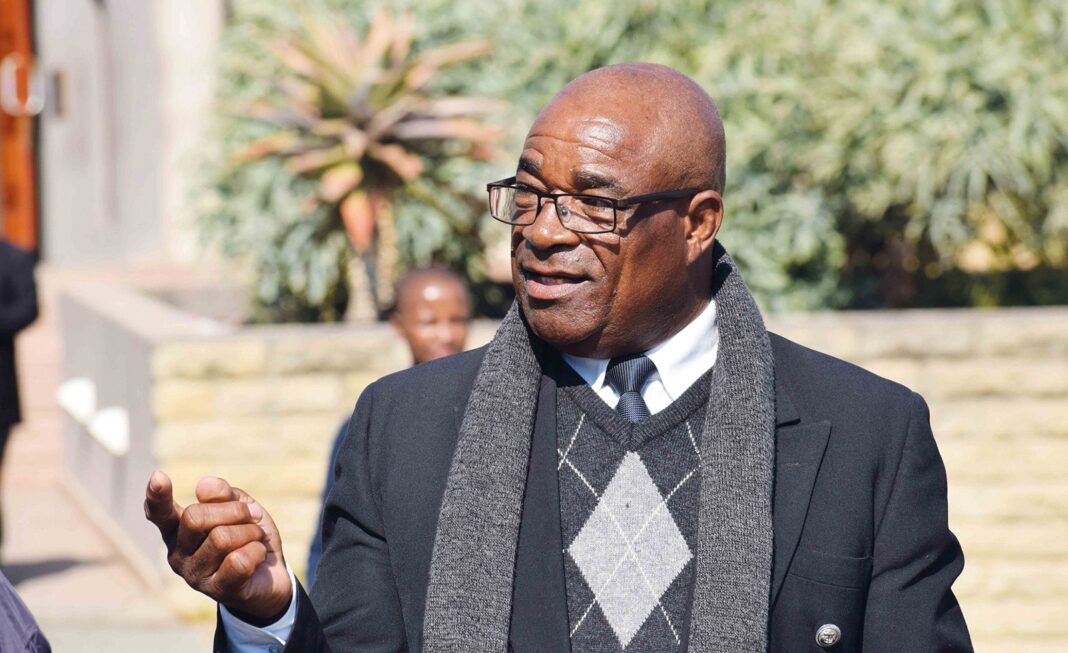

In 2022, the Lesotho Tourism Development Corporation (LTDC) launched the Lesotho Council for Tourism (LCT) which was tasked with improving the tourism sector in the country. This was viewed as a step in the right direction as LTDC moved to strengthen the industry. It has been almost a year now since the birth of the council and theReporter’s Seleoe Nonyane touched base with the LCT chairman Makhetha Motšoari to find out how the organisation has fared in the execution of its mandate. Motšoari answers frequently asked questions about the council and shares his thoughts on the future of Lesotho’s tourism industry. He has previously debunked the myth that tourism was for the rich and elite, who could afford to engage in tourism activities, pointing out that it is a potential source of economic growth and poverty eradication in developing economies.
It has been just over a year since the Lesotho Council for Tourism was launched. Please remind us what its mandate is.
We look for funding for tourism associations in the country. We also mediate between the associations and the government. We are also mandated to acquire markets for the associations. Our duty is also to conduct research and come up with ways that can improve the tourism sector in Lesotho.
Initially there were concerns that the council’s functions would overlap with those of the Lesotho Tourism Development Corporation. Has it encountered such? To what extent has that been avoided or managed?
The corporation does not interfere with the council. Our mandates are totally different. LTDC is there to market tourism in the country and as the corporation does so, there is no harm with the council holding hands together with LTDC to see that it fulfills its mandate. So, there is no way our mandate overlaps with theirs.
When we got into office, we set down with LTDC and agreed on the mandate and where we can meet each other halfway. We also discussed how to avoid overlapping and deal with it in the event it occurs. We agreed that our work is intertwined with that of the corporation.
What have been the council’s major successes?
Having to take one of our tourism associations to the Tourism Indaba which was held in Durban South Africa this year. Our job was to obtain funding for the trip and the association was able to attend the seminar successfully. We were working with LTDC to make sure that this happened. This was our major role as the LCT. That is the biggest thing we managed to do because such an Indaba is where different countries meet and even collaborations take place. It also offered an opportunity for networking and the display of what our country has to offer.
So, we were bound to have our members go and showcase what our country has to offer to other African nations and network with different countries, and we managed to do that.
You said the council would conduct research on laws that can be formulated to benefit and improve the tourism industry. What headway can you tell us about in this regard?
We once had a stakeholder meeting with different sectors at the State Library where, among other things, we looked into the factors that affect our tourism sector as well as look into the laws that affect us.
For example, there was the issue of associations that were intended to be formed, but there were laws that hindered their existence. We are talking here about the association that deals with issues of wildlife. It was in that meeting that we agreed that there was a need to look into laws that govern the environment. Therefore, we advised stakeholders to form an association that focused on protecting the wildlife. In that respect, we had to tell them to form an association and after doing so we brought forth to the environment sectorsome of the laws that will help ensure that people do not destroy wildlife.
However, the biggest challenge that we normally encounter is the issue of funding; we were supposed to have another stakeholder meeting but that has not yet happened due to lack of funds.
For these stakeholder meetings to become a success, there is need for the members to pay subscription fees. Just two or three members have paid their subscriptions and, as you see, that means money is limited.
Working towards this, the government has promised to include the council in the budget so that we can have an office with a secretariat to cater for running expenses. But none of these promises have materialised so far. We are also trying to see how we can get funding in order for the council to function.
So, even though some of the things were clear plans, the funding issue and availability of resources is key to help us function better.
How beneficial has the tourism levy that came into operation in July 2022 been and who is responsible for administering it?
As LCT we have our representative in the board that manages the fund. From there the funding goes to the board. For example, when we have an activity that we want to do, we ask for funding from the fund itself. We write a letter as LCT on behalf of the different associations and the letter will go to the LTDC board which in turn will decide on the way forward as the final arbiter into whether our request is welcome. In this regard, we received aid towards the Indaba trip as LCT. The fund is there for us to utilise it after our requests have been looked into and given assurance that it is material.
We are going to have the WITSA (Women In Tourism Southern Africa) conference in October this year, and the fund will also go towards the event. When all that is said and done, this means that the fund is being administered properly as far as we are concerned as the LCT.
What tangible landmarks can you mention that are a direct result of reinvestment of the levy into the industry? We contributed towards the Indaba trip. We made an application stipulating that some of our members would be attending the Indaba and can we please get funding from the levy.