
Twenty-four residents of Lesia in Ha Thetsane, Maseru, who were relocated by the Lesotho Highlands Development Authority (LHDA) in 1997, are demanding relocation once again 26 years later, citing dangerous and deteriorating living conditions.
The residents were initially moved to make way for the construction of the Kofi Annan Road. Now, they say their houses are crumbling due to poor construction and unsuitable land, posing a serious threat to their safety.
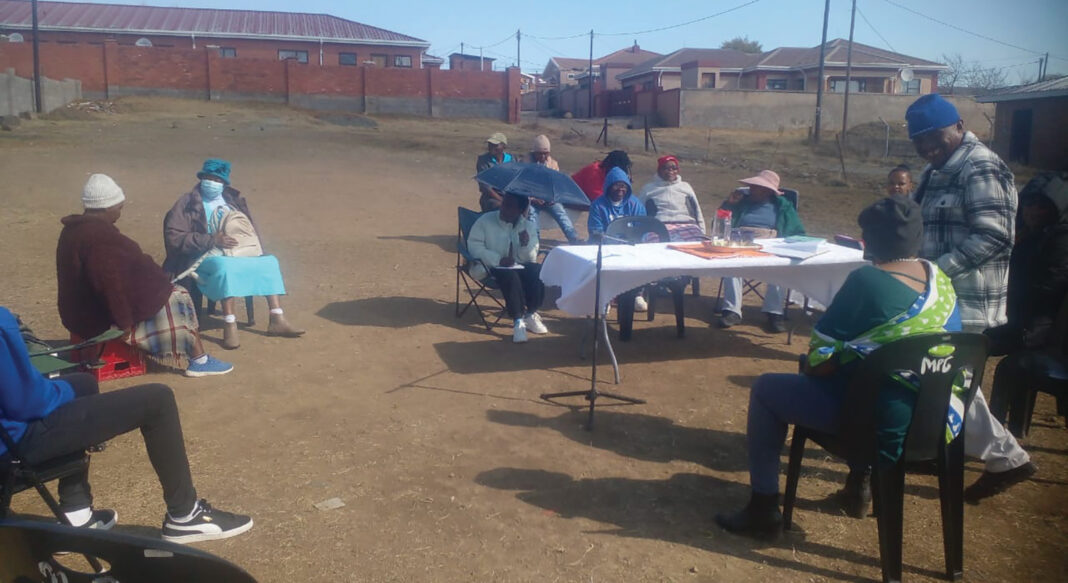
During a press conference on Tuesday, the residents took journalists and LHDA officials on a guided tour of their homes, revealing cracked walls, damaged roofs, rotting ceilings, and waterlogged yards. The tour was also attended by the Policy Environmental Justice and Water Resources Advocacy (PEWA), a non-governmental organisation that supports communities affected by LHDA projects.
Residents said the relocation site is prone to waterlogging and erosion, making it unsuitable for habitation. Some are now demanding full relocation to a safer area, while others are calling on LHDA to urgently repair the damage, including roof and ceiling replacements, structural reinforcement, and the installation of proper drainage systems.
They also criticised the quality of construction, blaming the original contractors for laying inadequate foundations despite the area’s known challenges.
“Our problems started when we were moved here. LHDA only paid attention last year when they replaced the leaking roofs, but the new ones are also leaking. The ceilings are now rotting. Other households that came after us don’t face the same issues because their builders laid better foundations. But our yards are always flooded, making the houses cold year-round,” said resident ‘Malerato Peleha.
‘Mathabelang Pheteng also expressed frustration, accusing LHDA of relocating them without consultation.
“We were never consulted about the suitability of this place. We come from different areas in Ha Thetsane like Lekhalong and Ha Tsolo. We always knew this place wasn’t fit for housing. We only found out we were being moved here after the houses had already been built,” she said.
“Relocation is already stressful, but being moved to a place like this has made it worse. It’s affecting our mental health.”
The residents further claim they are restricted from improving their economic situation, such as by building rental flats or shops, limiting their livelihood opportunities.
In an interview with theReporter, PEWA founder Lenka Thamaeemphasised the importance of holding implementing agencies accountable and ensuring that affected communities are actively involved in all stages of development projects.
“PEWA advocates for resettlement plans that truly work for communities, beyond mere compensation. We are pushing for transparency, community involvement, and sustainable solutions that restore and improve livelihoods,” said Thamae.
As frustrations mount, the affected families are calling on LHDA to urgently intervene before the situation deteriorates further.