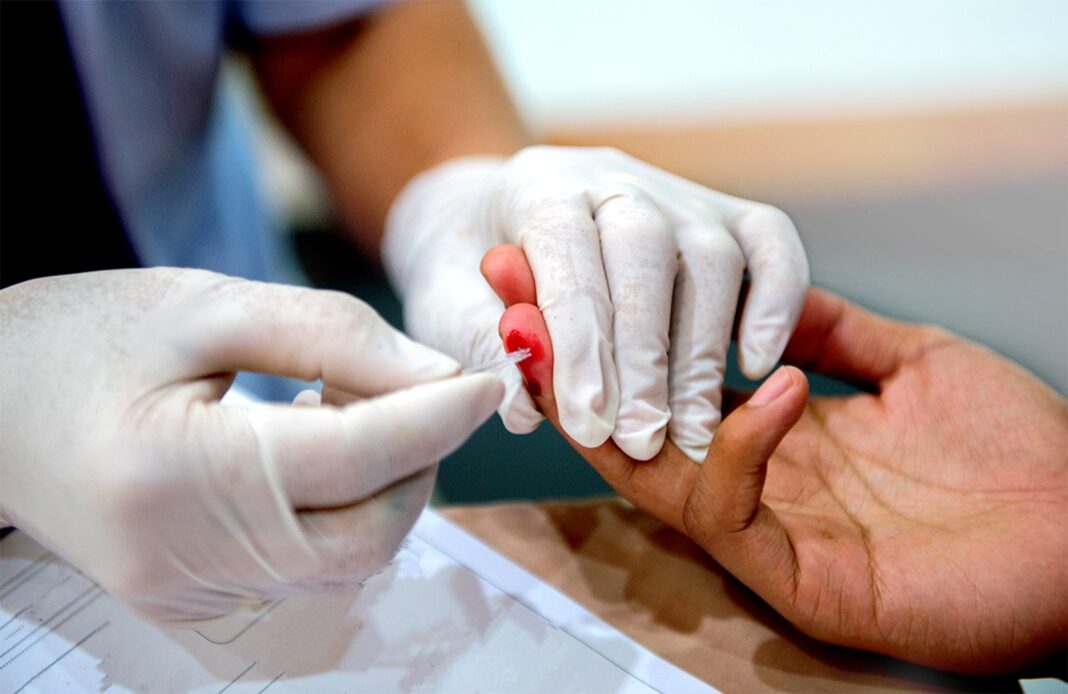

Community engagement plays a vital role in sustaining the HIV response by increasing the uptake of services through awareness-raising and upgrading testing services, treatment, and prevention.
This was said by the Executive Director of Phelisanang Bophelong HIV/AIDS and Chairperson of Community Engagement in the Sustainability Thematic Groups, Thakane Kotelo, during the recent launch of World Aids Day celebrations to be held on December 1, under the theme: ‘Overcoming Disruption, Transforming AIDs Response.’
The theme serves as a reflection on the progress made in the HIV response while acknowledging the challenges that remain.
“Without engaging our community, there is no adherence because support from the community is essential,” she noted.
Kotelo said community engagement empowers communities to take ownership of their HIV response, leading to more effective and sustainable solutions.
The community is in a position to say how they want services, so it’s high time we go to them and provide services, she added.
“We are at a very critical stage whereby the global HIV response has achieved the main things, but which are very fragile, and if we are not sensitive enough, we can go back to where people are going to die and develop resistance to treatment,” she warned.
She emphasized that a sustained response to HIV means preventing treatment interruptions and ensuring that those on treatment achieve viral suppression.
Kotelo applauded Lesotho for surpassing the global target of 95-95-95, with impressive numbers of 97-97-99. However, she cautioned that it is important for the country to plan on how to sustain this achievement.
Kotelo also highlighted the vulnerability of key populations, including children, adolescent girls, and young women, particularly those between 15-24 years old who have higher infection rates than their male counterparts.
“The question is, who infects them? Let’s go out and take services to the communities. Let’s build our future starting with this information that shows the importance of community engagement in HIV response,” she urged.
Giving the status of HIV response in Lesotho, the National AIDS Commission (NAC) Programme Manager, Tiisetso Piet, revealed that new HIV infections have significantly declined.
She revealed that Lesotho is on track towards reaching the 2030 target of reducing new infections by 90 percent, citing there has been a significant improvement in epidemic control – adult HIV prevalence has reduced from 25 percent in 2010 to 17.1 percent in 2024. Some reasons for this decline include deaths not necessarily from AIDS related causes.
Piet highlighted that according to the Lesotho Population-Based HIV Impact Assessment, new infections declined from 5,000 in 2020 to 4,800 in 2023. Currently, the figure stands at 3,200. This reduction could be attributed to various factors including the country’s efforts to scale up antiretroviral therapy (ART), and prevention services.
Increased access to HIV testing and counselling, voluntary medical male circumcision and pre-exposure prophylaxis (PrEP) have also contributed to the decline, Piet indicated.
Additionally, the country’s focus on addressing social and structural drivers of the epidemic such as poverty, gender equality and stigma has helped reduce new infections.
For his part, Deputy Principal Secretary in the Prime Minister’s Office, Tšeliso Lesenya, highlighted the notable gains Lesotho has achieved over the years. These include increased access to treatment, reduced AIDS-related deaths, and stronger community support systems.
However, Lesenya stated that persisting gaps remain, including higher HIV prevalence among certain population groups and barriers to accessing services.
He added that global disruptions in health services, economic conditions, and social support systems have affected HIV responses.
“As we mark World AIDS Day, we must recommit to ensuring that no one is left behind, identify the gaps, and strategise on how to fill them, as well as find ways to sustain our gains.
“The Office of the Prime Minister, through the National AIDS Commission, will continue to guide and coordinate a national response that includes government, civil society, development partners, communities, and the private sector,”
Lesenya said, stressing that the success of these efforts depends not only on institutions but on everyone.
He pointed out that the fight of HIV is not over, further calling for commitment, unity, and proactive to overcome disruptions, transform the AIDS response, and continue moving towards an AIDS-free Lesotho by 2030.
Acting Executive Director of the Lesotho Network of People Living with HIV/AIDS (LENEPWHA), a non-governmental organisation for people living with HIV, Boshepha Ranthithi, highlighted the need for sustained efforts to overcome disruptions that hinder progress in the HIV response.
He recalled that way back in 2005, people living with HIV faced significant challenges until 2010 and despite progress made, much work remains.
Ranthithi said overcoming these requires adequate funding and capacity-building training, including enhancing the skills and knowledge of community-based organisations and healthcare workers to effectively respond to the needs of people living with HIV.
It was also important to prioritise the engagement of community-based organisations in the HIV response. These play a vital role in providing support services, promoting awareness, and advocating for the rights of people living with HIV.
By engaging with such organisations, government and stakeholders can better understand the needs of affected communities and develop more effective responses, Ranthithi stated, adding that continuous advocacy for resource mobilisation is also crucial in sustaining the gains made in the HIV response.
He further called for increased funding and support to ensure that people living with HIV have access to the services and care they need, investing in programmes that promote HIV prevention, treatment, and care, as well as addressing the social and economic challenges faced by affected communities.
There is also need for collaborative efforts from governments, civil society, and communities to ensure that everyone has access to the services and support they need to live healthy and fulfilling lives.
Speaking at the same event, the UNAIDS Country Director, Pepukai Chikukwa, reflected on the importance of HIV response during the commemoration of World AIDS Day, expressing mixed feelings about the progress made.
While acknowledging the disruptions and despair experienced by communities, Chikukwa commended the government’s efforts in ensuring the continuity of HIV treatment services despite challenges.
She also highlighted Lesotho’s significant achievement in surpassing the 95-95-95 global target with a score of 97-97-99. The target aims for 95 percent of people living with HIV to know their status, 95 percent of those who know their status to be on ART, and 95 percent of those on treatment to achieve viral suppression by 2030.
“This target is crucial in reducing the spread of HIV, improving the health and well-being of people living with HIV, and ultimately achieving an AIDS-free generation,” she said.
This accomplishment is important in prolonging the lives of people living with HIV, enabling them to become productive members of society, and reducing the risk of new transmissions.
“When people living with HIV are virally suppressed, they become productive and able to look after their families. It also reduces the risks of new transmissions to their sexual partners,” Chikukwa explained.
She stated that Lesotho’s progress is notable, with a 61% decline in mortality since 2010, one of the highest globally.
She noted that despite this progress, Lesotho still faces challenges, particularly among adolescents, children, and women, who are losing their lives to HIV and related illnesses like TB and cancer.
“HIV is not over. Lesotho is still among the top three countries heavily burdened by the proportion of people living with HIV,” Chikukwa added.