
‘Mantšali Phakoana
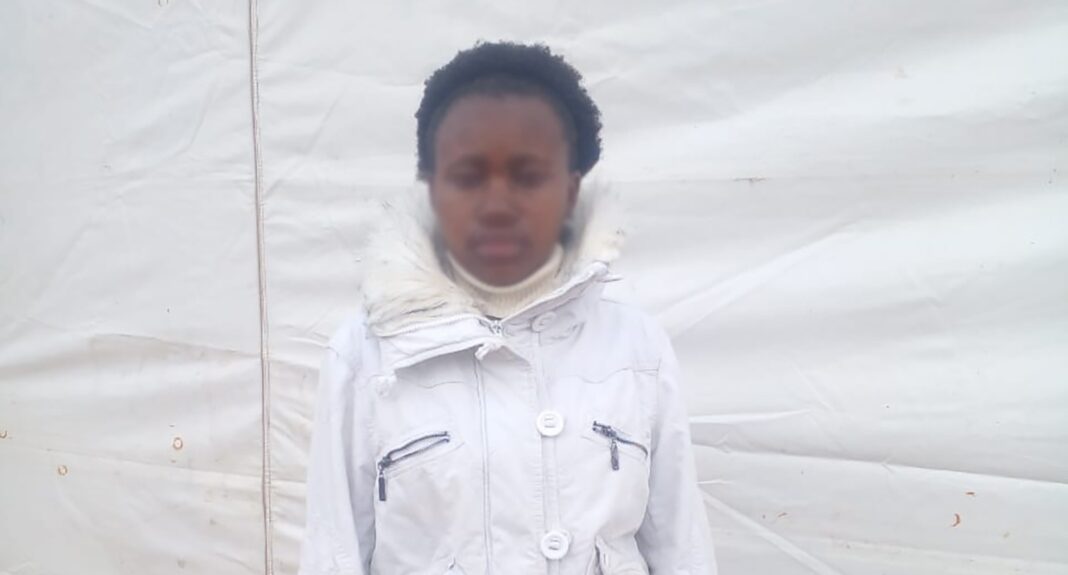
Five years ago, when she was 14, Puseletso (not her real name), dropped out of school at grade 8 and started loitering around the village without any job to occupy her mind. She ended up falling pregnant.
In a family of seven children, Puseletso was the only one who had reached high school, until her jobless mother forced her to drop out from school because she could no longer afford fees after her husband died in 2016.
One day Puseletso met a 16-year-old boy who offered to take her out and promised to love her for the rest of his life. Serenaded by being told she was beautiful and loved, for the first time in her life, she agreed to take a walk with her new boyfriend.
A month into the relationship, Puseletso says, she and her boyfriend had unprotected sex. She became pregnant and only learned made the shocking discovery eight weeks later.
“I did not suspect anything when I first missed by period. As months passed by, my mother continued to buy me sanitary towels but I would give them to a girl next door, so my mother would think I was still using them.
“I could not muster the courage to tell my mother or my sisters that I thought I could be pregnant because of shame. I also knew that people in my village were going to mock my mother more than me. I had seen them doing that to other teenagers who fell pregnant.
“People say all kinds of things about us teenage mothers. I have now learned to live with the reality that I am a mother at my age. I can’t wish it away,” says the 19-year-old mother of Thotaneng village at Ha Khabo in the Leribe district.
Puseletso says her devastated mother took her to the local health centre where tests confirmed her pregnancy. She says her mother supported her through the pregnancy until she delivered a bouncing baby boy.
Life became really tough for the family when her breadwinner mother fell sick but they never went to bed on an empty stomach because her sister still provided for them.
Puseletso says since the baby was born, she never saw the man who got her pregnant as he is reported to have gone to South Africa to look for a job.
However, she says she is still filled with so much anger that she thinks it might not end well if she finally gets to meet him again.
“I walk with my head high. I am not the timid type and I don’t care what people say. The experience has made me strong. I don’t think the way I used to think. I may be young but I am now a mother and have to take care of my child and help my mother who is now sick with house chores.
“Initially I thought of terminating the pregnancy, but part of me said what happened to me should not affect my child. Child development is fraught with complications and my son is a somewhat sickly child, but I have to be strong for him.
“What I can say to other girls is that they should not be fooled by a man’s sweet words. Boys will tell you all sorts of sugar-coated words, but after sleeping with you, they just see you as trash,” Puseletso warns.
She further advises teenage girls to focus on their education and steer clear of the hardships of early motherhood.
Since giving birth, Puseletso is now among women who receive family planning services.
The United Nations Children Fund (UNICEF) defines teenage pregnancy as ‘a teenage girl, usually within the ages of 13-19, becoming pregnant and girls who have not reached legal adulthood’.
The World Health Organisation (WHO) states that most teenage pregnancies and childbirths are not planned and wanted.
It says some of the complications associated with teenage pregnancy include pre-term labour, intrauterine growth retardation and low birth weight, neonatal death, obstructed labour, genital fistula and eclampsia.
The United Nations Fund for Population (UNFPA) supports the government of Lesotho with the introduction of postpartum family planning, in the initiation and use of family planning services immediately after child birth and within the first 12 months following childbirth.
The goal of the family planning services, according to UNFPA, is to reduce maternal and infant mobility and mortality by preventing unplanned and unwanted pregnancies and to reduce unmet needs for family planning among post-partum women.
The organisation states that teenage girls aged between 15 and 19 years are twice more likely to die during pregnancy and childbirth as compared to women in their 20’s, whereas those under the age of 15 years are five times more likely to die.
Out of concern for the high rate of maternal deaths, UNFPA, the United Nations sexual and reproductive health agency, supports the government of Lesotho’s efforts to increase access to quality sexual and reproductive health and rights (SRHR) services that are integrated and youth friendly.
The aim of these efforts is to prevent maternal mortality, reduce new HIV infections and eliminate gender-based violence and harmful practices.
UNFPA also leads on implementation of the 2gether 4 SRH joint programme, in collaboration with the United Nations Programme on HIV/AIDS (UNAIDS), UNICEF and WHO to scale up SRHR, HIV and sexual and gender-based violence services for all, especially adolescent girls, young people and key populations.
The programme provides catalytic support to the government, civil society and communities.
UNFPA national programme analyst (adolescent and youth) ‘Maseretse Ratia emphasises the need to prioritise prevention of unintended pregnancies.
Ratia points out that early childbearing is associated with health risks for both mother and child, adding teenage mothers are more likely to experience pregnancy-related complications that lead to maternal death.
She indicated there is need to empower women and girls to make affirmative decisions about sexuality and motherhood.
“For this to happen, we must educate young people about sexuality and reproductive health, and to guarantee access to the broadest range of contraceptives and quality sexual and reproductive health care.
“A girl child ought to be liberated, independent and able to voice her opinion instead of being consumed by meeting societal expectations,” she added.
A village health worker at Ha Khabo Health Centre, ‘Malebajoa Leroesa, says the rate at which young girls become pregnant in their area was alarming.
She says teenage pregnancy has compromised most of the girls’ development opportunities and forced them to drop out of school as they fear discrimination from their peers.
She believes there is need for a collaborative effort between village health workers, health professionals, community leaders and parents to hold public gatherings and create awareness on the importance of family planning.
“Parents should also understand that girls, too, have rights to family planning. I know it is not easy but it is high time we accepted that, otherwise we will keep on experiencing high rates of teenage pregnancy.
“Let us engage our girl-children in our conversations on issues that include sexual rights. If we do not do that, they will get wrong information from their peers, with disastrous consequences.
“Some of these teenagers who become pregnant are turned into victims of forced marriage because at times parents insist they will not stay under the same roof with ‘another woman’,” Leroesa noted. She added that one of the challenges faced by teen mothers is that they are not able to follow birthing instructions due to lack of understanding or experience with motherhood.