
By Neo Kolane
The department of home affairs says it has run out of stock of the 50,000 passport booklets it had procured in the last financial year, leading to the current non-issuance of passports.
This was revealed by the department’s assistant public relations officer, ‘Marelebohile Mothibeli, who said the department has since used the budget it was allocated for this financial year to order a new batch of booklets.
Although she declined to disclose the exact number of passport booklets home affairs has ordered, Mothibeli gave an assurance that new stock is expected to arrive by the end of this month from an undisclosed supplier overseas.
She could not quantify the backlog of applications either.
“I cannot disclose how many applications are pending. The last time the passports were issued was last week, but before then they were still being issued,” she said.
Mothibeli explained that passports were issued according to specific criteria, namely normal, damaged and urgent categories.
“Applying for a normal passport costs M130 and it comes out after three days; replacing a damaged passport carries a penalty of M300, meaning it costs M430.
“An urgent passport costs M630 and it comes out after a day or two,” she indicated.
Mothibeli further revealed that the department had to deal with a huge volume of urgent applications and this affected the issuance of the normal passports.
She reiterated the issuance of the application and processing of passports will be back to normal by December 20.
Mothibeli said contrary to earlier government suggestions, the non-issuance of passports was not caused by the depletion of microchips supplies. An integral part of a passport, a microchip is an electronic device which contains the holder’s biometric information used to identify an individual.
Former home affairs principal secretary Tumelo Raboletse had told a local newspaper that Lesotho was struggling to issue passports to its citizens after supplies of security microchips that is critical in the production of passports were hit by the Russia-Ukraine war.
“About half of the world’s semiconductor grade neon and palladium supply comes from Ukraine and Russia. The war between the two countries has severely affected supplies of the commodities which constitute a microchip,” Raboletse had said.
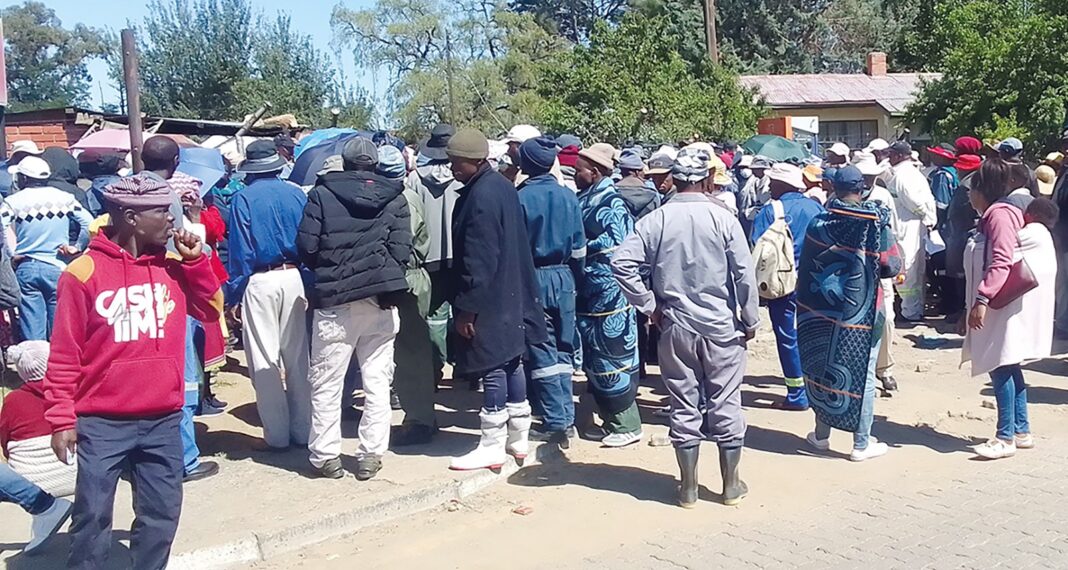
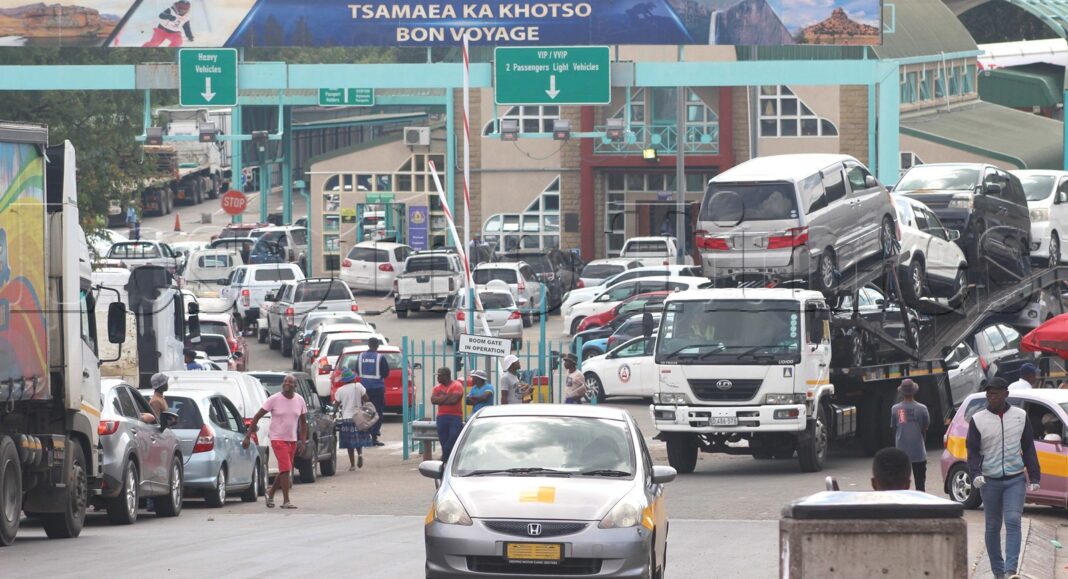
The unavailability of passports at home affairs has led to some Lesotho nationals who work in South Africa losing their jobs.
One of them is Mohau Toloane of Qoaling in Maseru, who used to be employed at a café at Somerset in South Africa’s Western Cape province.
Toloane applied for a normal M130 passport in February after it had expired on January 7, 2023 but up to date, it has not yet been issued.
“I was told to come back after a month,” he said.
He went to work and crossed at one of the many illegal crossing points between Lesotho and the neighbouring country. When he came back in April, he went to the home affairs department but the passport was still not ready.
Toloane went again in May but there was no still no change to his ordeal.