
‘Mantšali Phakoana
Lesotho joined the rest of the world in commemorating the Human Rights Day on Sunday in Thaba-Tseka, to raise awareness about the inalienable rights that everyone is entitled to as a human being.
This year’s event was commemorated under the theme: ‘Equality, Reducing Inequalities, Advancing Human Rights.’
Seventy-five years ago, the world was embarking on a new chapter, one that recognised the fundamental rights of every individual.
The adoption of the Universal Declaration of Human Rights in 1948 was a historic milestone, a beacon of hope in a world emerging from the shadows of conflict and despair.
During the commemoration held on December 10 annually, various programmes are organised across the world to encourage governments, social organisations to further the cause of equality and protection of the rights of all individuals irrespective of race, colour, sexual orientation or religion.
The event coincides with the 16 Days of Activism Against Gender-Based Violence (GBV) which commence with the International Day for the Elimination of Violence Against Women on November 25 and end on December 10.
These two markers symbolise that achieving gender equality is not possible without addressing gender-based violence, a human rights abuse that holds back women and girls from fully and safely participating in social, economic, and political life.
Ultimately, gender-based violence harms everyone, regardless of who experiences it, and prevents communities from reaching their full potential.
Lesotho, like many countries around the world, has seen rising numbers of gender-based violence. In 2022, the government passed the Counter Domestic Violence Bill, with the aim of strengthening protections against physical and economic abuse of women and children and supports health care, psychosocial support and justice for survivors, all with direct economic ramifications.
The Act empowers courts, including customary courts, to pass restraining, interim, and tenancy orders, which protect survivors from further abuse. Despite the availability of these legislative protections, some survivors remain vulnerable to their abusers.
According to a study conducted by Gender Links Lesotho in 2013, 86 percent of women in Lesotho have experienced some form of violence at least once in their lifetime and only five percent who reported cases of abuse had the police open a docket for them.
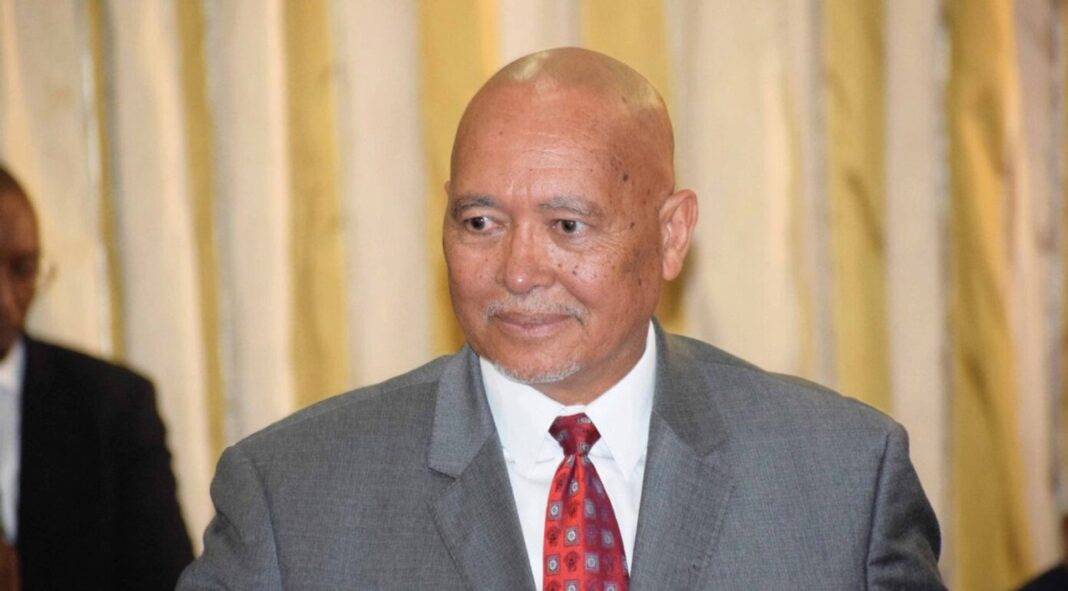
Speaking during the commemoration, law and justice minister Richard Ramoeletsi said human rights belong equally to everyone and bind people together as a global community with the same ideals and values.
Ramoeletsi noted that practices worldwide have proved that promotion of human rights is a project without a life span, that demands continuous and steady ever rising efforts from equally committed partners.
“As we also mark the end of the 16 days of activism against gender-based violence, let us remember that gender-based violence is a human rights and public health issue that limits the individual and societal development.
“There should be zero tolerance to gender-based violence and early child marriages; to any offending and archaic cultural practices and unaccepted acts such as rape and killings of women and girls,” he pointed out.
Ramoeletsi further stated that government will redouble its efforts in the fight against gender-based violence and exert decisive leadership to answer the call to free women and girls from violence.
He pleaded with all partners, including civil society organisations, to continue supporting the capacity of local communities to influence change in attitudes and behaviour in order to reduce gender-based violence.
“In full recognition and honour of the priceless bedrock of human rights, namely universality, equality and non-discrimination, indivisibility and interdependency, we are going to give away some packages to 60 individuals from the marginalized groups of society,” he added.
Speaking at the same occasion, UN Resident Coordinator, Amanda Khozi Mukwashi said the UN stands united in its commitment to a world where dignity, freedom, and justice are not just ideals, but realities for all human beings.
Mukwashi emphasised that the cost of justice and the establishment of a Human Rights Commission are critical steps towards addressing challenges such as access to justice in Lesotho, which need urgent attention and action.
Globally, she said, development partners continue to confront poverty, discrimination, and inequality, which hinder the full realisation of human rights.
Mukwashi noted that the rights of Lesbian, Gay, Bisexual, Transgender or Intersex (LGBTI) persons, delays in justice, long detentions, and the rights of migrants and refugees are issues that require a steadfast commitment and action in Lesotho.
However, she indicated that the country has made significant milestones in advancing the rights to education and health care among other issues.
“In Lesotho and around the globe, we have witnessed remarkable progress in advancing human rights. From progress in education and healthcare to achievements in gender equality and access to justice, our journey has been one of resilience and determination.
“Lesotho has demonstrated commendable progress in promoting gender equality. This positive shift is especially evident in areas like chieftainship, where the approach towards women’s participation has evolved from previously held reservations to a more inclusive and equitable stance.
“We have seen progressive changes in access to land, inheritance laws, and policies affecting women in the workforce, including in the military. The Persons with Disability Equity Act is a testament to our commitment to inclusivity, ensuring protection and rights for all, leaving no one behind,” Mukwashi said.
The Head of Cooperation at the European Union (EU) Delegation to Lesotho, Mario Giuseppe Varrenti said the EU firmly believes that adhering to a human rights-based approach in police reforms can transform lives, decrease social tensions, prevent abuses, and provide justice to victims.
Varrenti showed that building trust between people and the police is pivotal, ensuring citizens feel empowered and safe to report crimes. Without this safety, the negative impacts can spill over onto the entire society.
“Shockingly, one in three women worldwide has endured gender-based violence in their lifetime. As law enforcement officers, you play a critical role in eradicating this scourge, ensuring everyone in Lesotho enjoys the full protection under the law, especially the Countering Domestic Violence Act of 2022.
“In our collective quest to end gender-based violence, it is imperative to shift our focus from survivors to perpetrators, addressing the root causes of such heinous acts rather than merely reacting to their consequences.
“I speak as a man to fellow men in the audience, I say that we must stand as allies, not oppressors, recognising that violence is a manifestation of weakness and fragility, not strength,” Varrenti noted.
Varrenti further stated that true strength lies in empathy, respect, and the rejection of toxic masculinity.
He added that a strong man embraces the success of their partners, mothers, sisters, and daughters; and is not threatened by it.
The European Union remains unwavering in its commitment to the universal values encapsulated in the UDHR. The core principles of human dignity, freedom, democracy, equality, the rule of law, and respect for human rights continue to be the guiding force shaping all facets of the EU’s internal and external actions, he added.
Foreign affairs and international relations minister Lejone Mpotjoane said a lot of efforts will be made to address the scourge of gender-based violence.
He noted that gender-based violence is on the increase and remains one of the main challenges facing women in Lesotho.
“It has been addressed by holding capacity building training sessions for police officers in the Child and Gender Protection Unit, judges, magistrates, prosecutors, chiefs, traditional and religious leaders on gender issues, human rights and how to manage GBV cases.
“To add on to these already existing challenges, the past years have been particularly difficult for all of us due to the Covid-19 pandemic which has been fuelled by deepening poverty, rising inequalities, structural and entrenched discrimination and many other gaps in human rights protection. Drastic measures had to be taken to contain the spread of the pandemic, thereby impacting on some fundamental human rights for many individuals and families.
“Despite these exogenous setbacks, there continues to be progress on most fronts albeit at a slower pace. The promotion, protection and advancement of human rights will continue to remain at the core of Government’s agenda,” he said.
Government will continue to undertake efforts to address the root causes of this crime, he added.
A UN report, in the meantime, reveals that one in three women experience GBV during their lifetime while more than five women or girls are killed every hour by a family member across the world.