
Some churches came together to establish an organisation called the Christian Council of Lesotho (CCL) in 1965. The ecumenical body is run by a nominated executive committee comprising the chairperson, deputy chairperson, and the appointed general secretary.
The council is legally registered under the Societies Act of 1966. It is a member-driven organisation that enjoys the legal status of an autonomous body having perpetual succession and powers to have property in its own name. Its objectives are: to foster closer co-operation and unity among churches and organisations of different Christian traditions for better understanding in order to enable them to bear a united witness to Christ in Lesotho, to enable churches and other such organisations opportunities to work together towards people’s spiritual, social and developmental needs, as well as to be a prophetic voice on national issues.
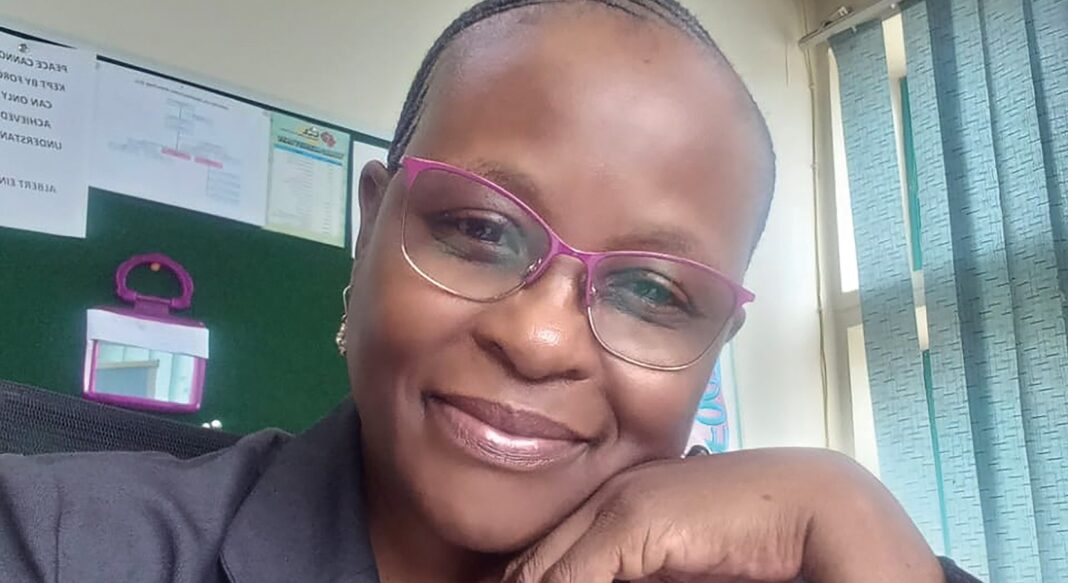
CCL’s daily affairs are currently overseen by the organisation’s general secretary, ‘Masechaba Mponeng Thorela, who is now in her second and last term running the organisation. theReporter got in touch with her to source a glimpse of her role and that of the organisation.
Briefly tell us about your background, education and profession.
I was born in 1976 and went to school until I graduated with a Bachelor of Philosophy degree at the National University of Lesotho. I also have a diploma in Applied Philosophy and Ethics. I am well-groomed and experienced in advocacy in good governance, conflict management, advocacy on gender issues and I am endowed with leadership skills.
You are the second woman in history of the CCL to assume duties as general secretary of this religious grouping, how did this come about?
The general secretary position emanates from the World Council of Churches down to the All Africa Conference of Churches and different regions in Africa including southern Africa. In the southern African region, which is SADC (Southern African Development Community) we have Fellowship of Christian Councils in Southern Africa (FOCCISA) composed of churches in SADC member states. In FOCCISA, I am the only female general secretary and layperson. I have been joined by another layperson, Advocate Vusi Kunene, who is the general secretary of Eswatini Christian Council. From 2019 to 2022 I was the only layperson in FOCCISA. I joined the CCL in September 2016 as good governance and human rights programmes coordinator. In July 2017, I became the programmes manager and in 2019 October I was appointed the second female general secretary of CLL.
The CCL has in the past often been accused of meddling in Lesotho’s politics. What are your thoughts about it?
We are aware of such perspectives. Society has a right to such perspectives. But let’s remember that the CCL was established due to political instability in Lesotho that compelled churches to come together to establish the body. The concern of the church is human stability. A person is a composite of two things – physical and spiritual. Our congregants go for elections and we should maintain moral duties and authority to guide them.
The vision and mission of the CCL is human development even in politics that are meant to develop people who live in Lesotho. CCL is not only concerned with politics but with general human development and social unity. We are local mediators who also get involved in health. In security issues, we get involved in conflict resolution and facilitate dialogue. That is why we can be seen to be meddling in politics. For instance, in 2017 we had a committee involved in resolving a labour dispute concerning teachers who had embarked on a nationwide strike.
What is CCL’s mission and the reasons for its foundation?
CCL is an ecumenical entity of Christian fellowship promoting the Christian faith and serving as a prophetic voice in national unity and social development. It is set to be a leading body in the development of a human person in almost all spheres of life propelled by the Christian faith for human wellbeing. CCL was established in August 1965 and registered with the law office in 1966. We are now a member organisation of seven churches and one student Christian movement known as the Student Christian Movement.
What has the CCL achieved so far based on its mission?
The CCL has stood the test of time as it has been relevant to our society in developing people. We have also played a crucial role in maintaining stability in Lesotho. We have always urged political parties to pledge commitment to accept election results and outcomes since the 2012 general elections. The CCL also managed to mediate between warring parties within army circles that resulted in some nationals fleeing the country. We helped in mediating between the warring parties and the exiles. We offered both physical and psychological support to those involved in the battles including their families with the assistance of the United Nations Development Programme and SADC. Our mandate is peace building and facilitating dialogue to instill good conduct to both victims and perpetrators of violence and unrest. Since the 2012 national poll, we have seen political parties pledging their commitment to accepting election results, an initiative steered by us. We also intervened in the nationwide public transport strike that hit the country some years ago.
Given the fact that the CCL leadership has for long been dominated by men, what role do you think you should play in building it up especially as a woman general secretary?
It is a fact that the CCL is a male dominated environment hence it requires one to grow beyond personal, denominational and political interests. It also takes strong character as a female leader to do the job. There has always been a cultural belief that men are born leaders and this has in some instances discouraged women from realising their full potential. In my role as CCL general secretary, there is need for me to be a person of quality character. I have to act against all odds and I believe that my studies in Applied Philosophy and Public Ethics come in handy. For instance, I had to resign from all structures of a certain political party because the CCL stands for neutrality and fairness. I was set to maintain neutrality, which was backed by my upbringing in my family and parents who were my pillars.
I am a young woman leading at a time when gender inequality is still rife but I am not allowing that to pull me down. There is also a denominational challenge. Some member churches fail to understand that CCL is to be run as a corporate governance organisation and not as a church. Again, some political parties attempt to use the general secretary as their mouth piece or information source. In addition, my security is at stake so I have to be alert at all times but generally I am not fearful.
I’m heading towards the end of my tenure since I’m now serving my last three-year term.