
By Neo Kolane
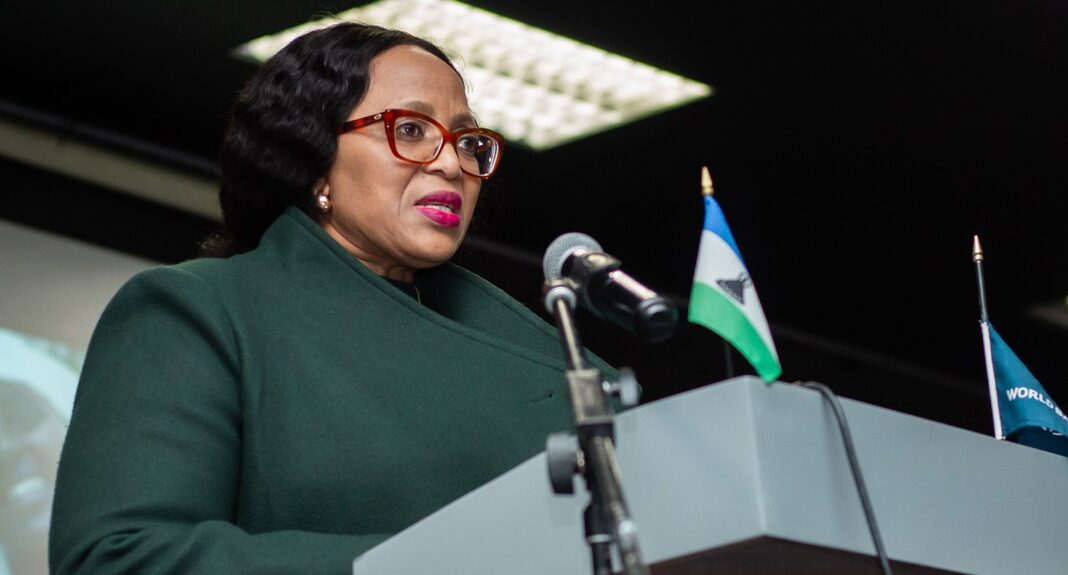
Nizam Goolam was this month announced as substantive CEO of the Lesotho Communication Authority (LCA) after serving in an acting capacity since June 2 2021.
Goolam, who brings a wealth of experience in the communications field, tells theReporter’s Neo Kolane about his plans to transform the Authority into a diverse regulatory body that adequately meets the public’s expectations.
theReporter: Please give us an overview of what the LCA is and what its objectives are?
Goolam: LCA is mandated to regulate the telecommunications, broadcasting and postal sectors in the country. The organisation seeks to ensure that it levels the playing field so that market players can be able to operate in an environment that allows them to be competitive and innovative.
LCA also works to control uncompetitive behaviour and ensure that services are provided taking into account the consumers’ interests.
What is your vision for LCA and how long it will take you to implement it?
Here at LCA, we work with three-year strategic plans. Fortunately, I am talking to you as we’ve started embarked on a new one which started in April.
My expectation is that the strategy should be implemented in the next three years and concluded during my tenure.
My main task is to make LCA a transformational and diverse regulatory body, while our mission is to contribute to meaningful universal connectivity by making communication infrastructure accessible, pro-band affordable, narrowing the digital divide, and creating a safe cyber space for all.
We have four values: innovation, collaboration, adaptability and transparency.
Having been within the LCA structures for a long time including two years as acting CEO, what would you say are the challenges/weaknesses that you have observed, and how do you plan to overcome them?
The first challenge is what I can call trustworthy digital infrastructure when it comes to our cyber security. We need to ensure safety, security and trust on the digital systems. We have to be on the lookout for online threats and make sure that we strengthen online security and safety so that we can build confidence in the digitalisation of all sectors and services.
The citizens of this country must be able to say they trust the digital space that we are transacting on.
The second challenge that needs to be addressed is related to consumer protection. We need to look at the services we are providing to ascertain whether customers are getting value for their money; that’s key. We need to educate them so that they understand the services we offer.
I will also put emphasis on online child protection. Policy makers still have to look at laws that can be put into place to protect children from harmful online content. As the regulator of the sector, we need to make sure that there is awareness about this.
I’ll also encourage competition, looking at our country’s two million people and big players like Vodacom Lesotho and Econet Telecom Lesotho. There are also many things that the youth can think about, like setting up mobile virtual networks and Internet Service Providers.
What changes can we expect to see during your first year in the LCA?
You will see a lot of activities on consumer education and awareness. The second thing is transforming the LCA internally to make sure that it’s able to respond to, and address the current needs of the sector.
You will also see collaboration with sister regulators and other stakeholders. This is because the financial sector, through the Central Bank of Lesotho, is very active in using digital platforms for financial services. Those digital platforms are provided by the communications sector.
You will also see activities in the build-up towards improving our cyber security. There will be awareness campaigns on that and other capacity development programmes with various stakeholders.
An erstwhile LCA head was involved in an acrimonious battle with the government, which ended up in the courts of law. This led to, among others, the autonomy and integrity of LCA coming into question. To what extend did this affect the image and credibility of LCA?
Normally when an institution starts engaging in litigation, be it with its principals – in this case the government or with its licensees – it is a sign that maybe something is not going the way it should and it needs to be addressed. Yes, the net effect of it is that it may result in reputational damage of the institution.
To what extent does LCA control/regulate the media and telecommunications companies?
The mandate of LCA is prescribed in the Communications Act 2012. We regulate telecommunication companies on pricing and the way they conduct business as prescribed in their licensing conditions. We make sure that there is compliance to the licensing conditions.
We also regulate the broadcasting sector, and not the print media. It’s not about whether somebody listens online or using traditional media, but rather about content creation. That is also what we regulate – we put licensing around conduct and our expectations.
The last one is the postal sector. We are still at the infancy of developing this segment. Our aim is to see it transform and meet the needs of the people.
Don’t you think it is only fair that the country should first have an official media policy and self-regulate, before government usurps that role through LCA?
Well, at present, we have a media policy, but even before we had it in place, the role of overseeing the broadcasting was given to LCA. With the media policy in place, this function will be dealt with by another entity. But until new institutions are set up, we will continue with that role.
At the end of the day, self-regulation comes with maturity of the sector. It entails minimal interventions by an oversight body to say, “You shouldn’t do this or that.” But as the sector is still growing, it will need that oversight body in the form of regulation to give direction.
How can we expect to see you interacting with industries and professionals that LCA regulates?
We are looking at what is called inclusive decision-making cycles.
Considering the convergence of technologies and services to digital space, it is no longer practical to regulate in isolation. So, the issue of co-operation and collaboration is part of our strategy because we need to co-operate with other sectors that use the communication infrastructure to ensure that the environment that we want to create allows growth in future.
When things converge to technology, we start to see a situation where there are overlaps in terms of regulation so, we need to be aware of such challenges. We need to communicate with regulators on the other side to make sure that we do not over-regulate and create grey areas or confusion.
Former minister of communications science and technology, Keketso Sello, revealed that 31 percent of LCA’s employees were shareholders at one of the mobile network companies, thus being “in breach of LCA regulations”. Is this still the case? What does it say about LCA’s morality and credibility in execution of its duties?
It is a tricky situation. The statement arose out of concern that there could be a relationship between LCA employees and its licensees. That assertion needed to be tested and analysed by competent authorities, in this case the Directorate on Corruption and Economic Offences (DCEO). The anti-corruption body should have looked into that. But then it was just a statement and nothing was done. But what I understand is that it was an issue of some LCA members having relatives working in the licensing institutions.
Two years ago, LCA made moves to regulate online content creators. This meant “a person with at least 100 followers would need to register with the LCA by providing identity documents, proof of residence and show ability to comply with Lesotho Telecommunications Authority (Broadcasting)”? How far did this project go?
When rules are developed, it’s a requirement that consultations are made with all stakeholders including the public. That suggestion was rejected. There was no way of progressing with it when it was not accepted by all stakeholders. So, it just fell off.
Basotho and the government were shocked in October 2020 when the LCA fined Vodacom M134 million and revoked its licence for failing to pay a M40.2 million fine imposed on it for several offences allegedly committed from 2015. How did this affect the Authority’s reputation and business?
Well, situations like that are very challenging because they create regulatory uncertainty. Where there is regulatory uncertainty, investors are hesitant to come.
If regulatory certainty is questionable, potential investors raise questions about their safety in the country. That was the negative side of it.
As a regulator when you start engaging in litigation with one of your licensees, it really says maybe the relationship between the two parties is not as it supposed to be. It implies that there are no proper mechanisms to resolve disputes or there is lack of clarity in terms of what should be regulated. The Vodacom saga you mentioned raised a lot of questions and brought the mandate of LCA and how it discharges it under the spotlight. However, the two parties were in 2022 able to sit down together and solve the matter amicably.