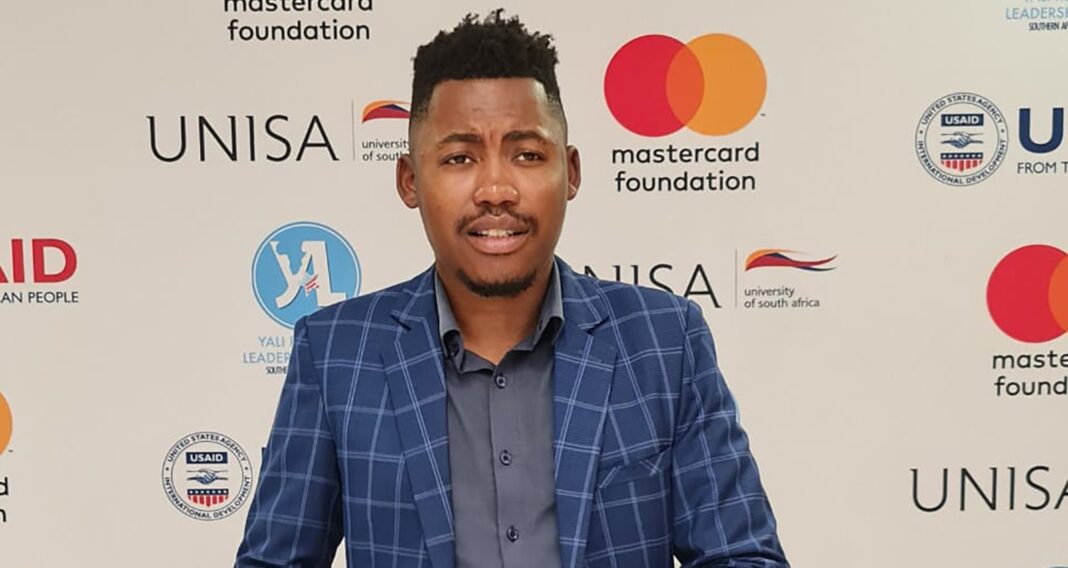

The president of non-governmental organisation, Voice of Youth Society (VOYS), Reatlehile Makateng, has vowed to advocate for the development and inclusion of youth in all aspects of life.
In this interview with theReporter’s ‘Mantšali Phakoana, the 26-year old Makateng also shares the essential roles played by both government and non-governmental organisations in the development of Basotho youth and how the challenges facing them can be addressed.
Please provide your brief biography
I was born and bred in Makhokhoeng Makhunoane, Butha-Buthe. I hold a Bachelor’s Degree in Education, with Sesotho and English Literature from the National University of Lesotho (NUL). Soon after graduating in 2021, I pursued a Masters of Arts in African Languages and Literature Programme.
In 2016 when I was in my second year, I was elected president of the National University of Lesotho Student Teachers Association (NULSTA and served for two consecutive years. I am also a founder and chief in command of Voice of Student Union (VOSU).
From 2018, I was elected president of the NUL Student Representative Council (SRC) for three consecutive years until June 2021.
I was also elected the official leader and representative of all the students of higher learning institutions in the country. By virtue of that seat, I became a member of the National Youth Interim Task Team facilitated by the ministry of gender, youth and sports, in 2021. Our duty was to prepare and validate the National Youth Development Bill, and the National Youth Council, amongst others.
Can you elaborate on your role as the Voice of the Youth Society (VOYS) organisation?
Our mandate is to empower the youth and ensure inclusion and their development in all aspects of life. We do that through advocacy and civic education. We advocate for the needs of the youth in the country; as the name of the organisation states, we are the voices of the youth.
We have a civic role to empower them by disseminating information that addresses barriers to opportunities. We do that by hosting workshops for youth to keep them informed about what the world can provide for them. We educate young people on issues like child marriage, teenage pregnancies, and gender-based violence.
What inspired you to take a leadership role?
I served as youth delegate during the formulation of Bacha-Shut Down after experiencing the struggles of youth in the country. This is a movement by the youth of Lesotho working towards holding the government accountable and pushing them to act towards solving issues that are faced by youth. I also had a privilege to attend the SADC Youth Summit focusing on youth employment and entrepreneurship development held in Botswana in 2022.
I attended a month-long training on civic leadership organised for SADC youth leaders by the America government through their programme called Young African leaders Initiative (YALI) in South Africa in February and March 2023. After the intense training, I was more determined to transform Africa as a young and qualified civic leader committed.
With this experience, I saw how young people came together with diverse ideas, proposals and plans of action to weigh-in on framing the future of the continent’s development agenda.
I also recognised that there is need to engage young people and get their perspective on how their future should look like, because ultimately, it is the youth who will become future leaders.
Ambition and ability have also been my major inspirations to becoming a leader. My desire is to see youth empowered included in every aspect of life. I have realised that there is a vacuum of youth leadership in our country. Youth are a forgotten and frustrated society because no one leads them to the right direction. Some of them know where they want to go but they do not have technical know-how; that needs a leader.
I have always believed that a leader should not only be a position but lead by example. One of the things stopping youth from thriving is that we are led by people with passion but lacking direction. They are willing to lead but they do not have skills to do so.
I have been part of the youth struggle in this country for a long time. Understanding this journey then makes it easy for me to reach the goals of young people. For an example, it has always been our concern that youth are excluded in decision making. They are not well developed because they do not have well capacitated leaders. The experiences I have gained help me be a neutral leader who is also not influenced by politics.
I have been very active in community work, volunteering both in and outside school. As I entered university, my colleagues trusted me with leadership roles, and that is where my biggest inspiration comes from; I was trusted to be a leader. A leader, especially in the political sphere, is elected by people who believe in his leadership.
What is the VOYS’s vision?
Our vision is to achieve youth empowerment, inclusion and development in aspects such as education, leadership, employment, and entrepreneurship.
One of the major reasons our youth fail to grow is because of lack of knowledge in improving their education. They are not empowered with knowledge especially in the remote areas where they lack ideas on what the world can give. Some don’t know what do to after completing high school. It is therefore, our vision to empower them with information.
It is also our vision to see the government establishing the National Youth Council, an active platform where the youth can develop themselves, practice leadership skills, and also lead their own development as body will have district leaders.
What do you see as your biggest challenges?
Our major challenge is lack of political will from the government. As the youth we speak right things, have right programmes and strategies that need to be implemented but without government’s support and political will, we won’t be able to succeed.
Most countries have established national youth council because they clearly understand that ‘nothing for the youth, without the youth’. Their governments understand that youth know better what they need for themselves. Our politicians are sometimes ignorant on issues that involve youth because our country does not have a national youth council, which is long overdue. Without it, government is failing to invest in sustainable ideas and projects that benefit the youth. They want us to be beggars forever.
What changes do you think Lesotho needs to make in order to reach and be more relevant in young people’s lives?
Lesotho needs to come up with initiatives that help young people become entrepreneurs and create employment for themselves and others. There is need to revisit the country’s education system. Is our education sufficient and adequate to respond to the unemployment crisis in the country? The answer is no. We still need to train youth for privatisation. Most graduates are still submitting their applications to the ministry of public service with the hope that they will work as civil servants. The reality is that applications keep on piling with no jobs created.
Our education system should promote students with critical thinking. We should develop skills so that they become independent in the future. There is also need for the Examination Council of Lesotho to improve its assessment standards, so that it accesses students’ skills, not knowledge only. They should be taught how create jobs not always expect to be hired.
The government should invest more on youth by establishing cooperatives and equipping young people with skills to run them.
Unemployment is one of the major challenges of the youth today, not only in Lesotho, but worldwide. How is your organisation intending to address this?
As the voice of the youth, we are going to advocate for unemployment to be considered a national crisis. We call upon government to introduce youth empowering programmes in employment and entrepreneurship development. We also advocate for change of the country’s education system to enable it to generate people who are capable and able to play a meaningful role in the private sector. We’ll also continue pushing the government to invest into sustainable projects for the youth. Further, we’ll make consultations to establish the skills and projects our youth have, so that we are able to merge their skills and help them form relevant sustainable projects that can contribute to their development and in turn, the country.