
The Computer Crimes and Cyber Security Bill, 2022 has ruffled feathers, prompting calls for it to be revised in its entirety through consultations among all stakeholders like the media and civil society organisations.
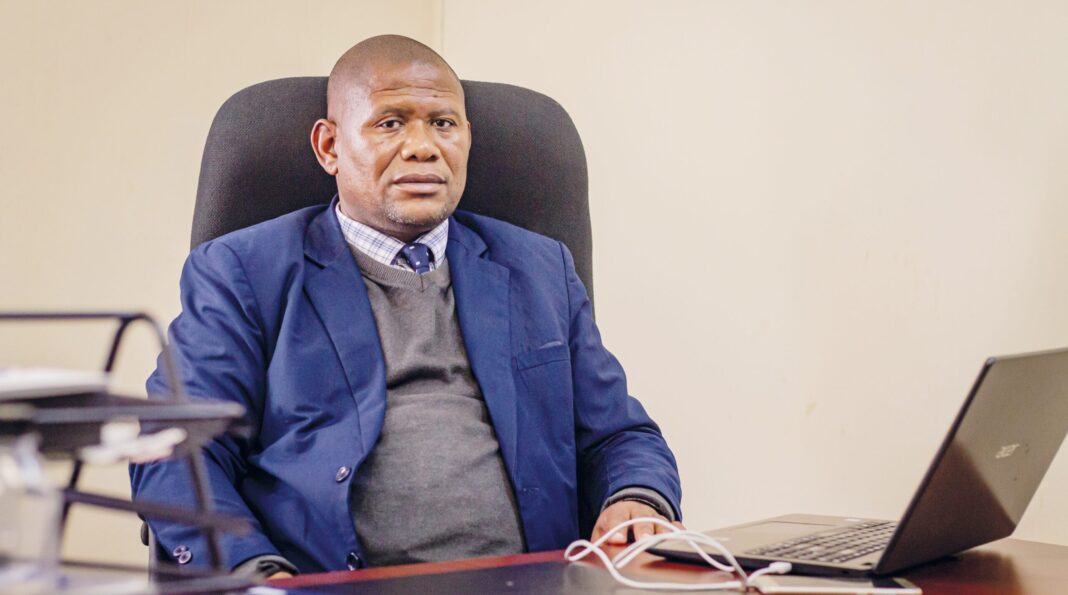
While some people believe that if passed, the Bill will finally curb cyber-crime and bullying in the country, civil society organisations (CSOs) and the media are concerned that it will violate some human rights including freedom of expression, right to privacy and freedom from arbitrary search and seizure of communications devices. In this interview with theReporter’s ‘Mantṧali Phakoana, media trainer and communications analyst Sithetho Mzimkhulu gives his take on the Bill.
theReporter: What are the objectives of the Computer Crimes and Cyber Security Bill?
Mzimkhulu: The Bill is a legal framework intended to deal with activities on the digital or cyber space, which have a criminal nature. By criminal we mean those acts that infringe on other peoples’ rights.
The Bill stipulates offences relating to the misuse of electronic communication devices and networks, the jurisdiction and powers of investigation, search, access and seizure as well as collection of evidence in respect of computer crime.
It also imposes fines in terms of criminal acts that are carried out by disingenuous members of society in the usage of digital space – both computer and cyber related. Such activities include computer forgery, fraud, exposing children to child pornographic material on the cyber space, harassment, intimidation, stalking of other people on the digital space, abusing them on the cyber space, accessing information illegally using a cyber or online space.
It entails issues like dissemination of content without the consent of other people. For example, in a case where two people were in a relationship and when things get sour, the other party exposes information like intimate photos or content to a third party, without consent from the affect party. That used to be a norm, but it is a criminal offence.
Apart from criminalisation of computer and cyber related acts, the Bill also calls for the establishment of a commission to enforce the law.
theReporter: The Bill has received widespread criticism from several sections of society including the media fraternity and civil society. What is your take on their concerns?
Mzimkhulu: The civil society’s role is to advocate for respect for human rights. Their mandate is to ensure that a human rights culture reigns within society. This includes protection of freedom of expression of opinion which is crucial to citizens, both online and off-line because of the advances in communication and media. This right is now prevalent because we live in an era of digital, information transformation where people are no longer restricted or constrained to their offline means of communicating, so they protect this rights now, on digital space.
On the other hand, the media is a dominant user of the internet. As a communicator to society, the media also uses digital space for its journalistic functions so it has a role to protect these rights to freedom of expression of opinion and media freedom. It also includes the right to access to information which the civil society are protecting.
To start with, the Bill is acknowledged as a positive move by government to promulgate a legal framework that seeks to protect citizens who are subjected to criminal activities by unethical and unthoughtful citizens who don’t consider the right of freedom for other people or who want to dominant the digital space for their own sake. They intimidate and harass other people on the digital space.
Such criminals embark on computer crimes like fraud and forgery, or use company logos without permission.
Civil society organisations applaud government for promulgating the Computer Crime and Cyber Security Bill. They acknowledge the intensity of the Bill but they are saying as well, if there is resort to law by government to curtail criminal activities, it must be done to a reasonable extent. The media feels threatened by some of its sections that not only restrict them from performing their work freely, but also violate their privacy and freedom of expression.
But while they underscore the fact that the law is necessary and there is a need to protect the rights for innocent citizens, the media says this shouldn’t go to the extent of diminishing the same citizens’ rights to freedom of opinion, media freedom, right of freedom to access information, for both media and citizens, right to privacy, right of the media to obtain and disseminate information and even withhold information if need be, so that is the critical centre piece of the civil society and media focus against the Bill.
The right to freedom of expression is the mother of all rights. It is an important one and is the driver of all rights, so if you diminish people’s rights of freedom of expression, right to access information, right to privacy, you are actually undermining or challenging their very human existence. This right is key to humanity especially during this critical time where citizens participate in the gathering of information, processing and dissemination of such.
theReporter: Which particular sections of the Bill are of concerns to both media fraternity and civil society organisations?
Mzimkhulu: There is a feeling that sections 22 criminalises the citizens’ ability to access information. Yes, the section talks of legal access in terms of accessing information that should not be in your hands. But, without that clause being explicitly defined by its limits and boundaries, it presupposes that if you access information on digital spaces which is believed to be illegal, you are liable to those fines. CSOs are saying this is wrong because they protect that particular right of access to information. This right is very critical. So, if the Bill criminalises access to information, you are actually diminishing citizens’ ability to access information.
Also of concern to the advocacy team is Section 24(2) of the Bill which they say interferes with data. The Section reads that “A person who intentionally and without lawful excuse – communicates, discloses or transmits any computer data, program, access code or command to any person not authorized to access computer data, program, code of command; commits an offense and is liable, on conviction, to a fine not exceeding M5 000 000 or imprisonment not exceeding 10 years or both.”
Section 38(i) of the Bill reads: “A person who, intentionally without lawful excuse or justification uses computer systems to relay or retransmit multiple electronic messages, with the intend to deceive or mislead, or uses any electronic device that does not reflect the origin of such message, or materialistically falsifies header information in multiple electronic messages and intentionally initiates the transmission of such messages, commits an offense and liable, on conviction to imprisonment for a term not exceeding 10 years or a fine not exceeding M5 million or both.”
Section 39 which demands disclosure of details of investigations and Section 43 which criminalises defamation need to either be reviewed or cancelled.
Section 39 of the Bill notes that a person who receives an order to a cybercrime investigation that explicitly stipulates that confidentiality is to be maintained, or such obligation is to state by law, and intentionally without lawful excuse discloses, commits an offence and is liable, on conviction, to imprisonment for a term not exceeding seven years or a fine not exceeding M2 500 000 or both.
Section 43 reads: “A person who publishes information or data presented in a picture, text, symbol, or any form of computer system knowing that such information or data is false, deceptive, misleading, or inaccurate and with the intent to threaten, abuse, insult, mislead or deceive the public or conceals commission of such offence, commits an offence liable on conviction, to a fine not exceeding M500 000 or imprisonment for a term not exceeding five years or both.”
They are also concerned with Section 59 of the Bill which gives authority to law enforcement officers to search and seize property when they see fit.
The argument that has been put forth is that these fines are too harsh. There is no rational behind a M6 million fine and six-year sentence. Yes, we understand that the value of criminalisation is to place sanctions against criminal activities that take place.
We agree that government has to curtail on the crimes that occur on cyber and internet space, but that should be reasonable. The severity of sentence should march the severity of the fine. There is no clarity on the rationale behind those heavy sentences and fines.
theReporter: Should the government decide to pass the Bill as it is, what would be the implications on media confidentiality and freedom?
Mzimkhulu: If the government promulgates a law against societies’ norms, because civil society and media represents society, and you push that law to go through despite realising its confidentiality, it would not see the light of the day. CSOs don’t believe there was enough public participation in the Bill.
Given the concerns which have been raised, why not withhold the Bill and consider them? What would be the intention of the government to ignore these concerns? Any law that fails to pass the task of legitimacy is null and void and I don’t think they (legislators) can pass a law that could later be declared null and void.
If the Bill passes as it is, it is likely to be challenged in the constitutional court where it would definitely be declared null and void. It is critical that government listens to the criticisms and revise the said sections. There is need to be rational, not emotional.
theReporter: So how do you balance cyber-crimes against the media’s right to confidentiality and freedom?
Mzimkhulu: There can be unintentional implications of the Bill, unintentional in that while it seeks to be aggressive on criminals who perpetuate wrong acts. But we’re saying don’t go over-board. There should be balance. The law should remedy criminality and not stop the media from doing their work, while it protects victims. The law should consider media rights.