
By Neo Kolane
As Lesotho plans to lay the ground work for the recycling of used automotive oil, there are calls for the establishment of mechanisms to regulate the process.
The initiative is spearheaded by the Petroleum Fund, which held at stakeholder forum in June this year to explain a feasibility study conducted by Group II company on recycling used oil in Lesotho.
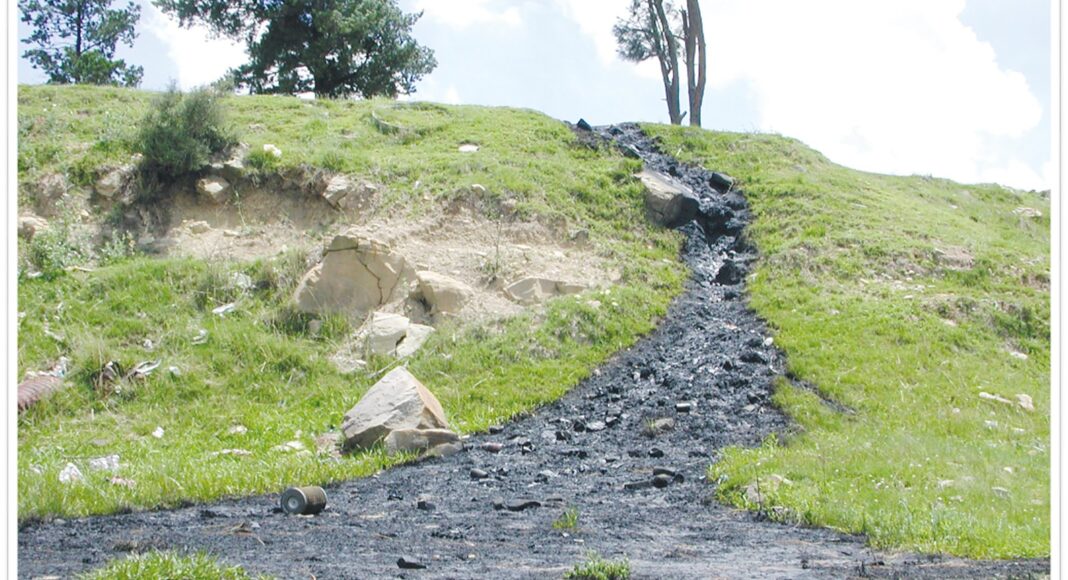
According to the Fund, used oil must be handled and managed in an environmentally acceptable manner in order to avoid indiscriminate disposal or spillage and prevent environmental damage to streams, rivers and ground water as well as ecosystem in general.
Effects of used oil are water pollution, soil contamination, disturbs efficiency of either water or sewage treatment works and air pollution.
The Petroleum Fund believes refining used oil can help create jobs within the petroleum sector in the country while ensuring that all petroleum products have a minimal negative impact on the environment.
The senior officer (environment pollution control) in the ministry of defence, national security and environment, Kobeli Tṧasanyane, describes used oil as lubricating oil that is no longer fit for use in petrol engines in cars and diesel engines in trucks, buses, tractors and earthmoving equipment.
Tṧasanyane says hydraulic systems, gearboxes and lubricating components in earthmoving equipment also generate degraded lubricating oil that is no longer fit for purpose and becomes what is called ‘used oil’.
“Industrial lubricating oil used in gearboxes, air compressors, hydraulic systems and machines in factories and mines also degrades due to ageing and contamination and ultimately becomes used oil that needs to be properly collected and disposed of.
“Current disposal or management practices include open burning, dumping on the open ground, disposal in unlined pits, selling to South African companies or giving to the public, using as fuel, using as medicine (ointment for animals), and as floor polish,” he said.
He recommends establishment of a public-private partnership to develop regulatory mechanisms, produce education material, raise awareness and disseminate information.
“The mechanism will put in place a used oil collection system. Filling stations and garages will have interceptors, and oil-contaminated sites should be cleaned up,” Tṧasanyane pointed out.
Kalebe Kalebe, a lecturer in the department of economics of the National University of Lesotho, explained at the forum that refining used oil was one of the ways of creating jobs in an economy.
Kalebe said used oil refining involves stages such as collection, delivery and processing. For this to happen effectively and efficiently, companies and labourers are engaged.
He stated that refining used oil means there will be fewer crude oil barrels being extracted from the ground.
He argued that this will also mean the earth will not be strained by activities that take place to extract more oil from the ground.
“When oil is recycled, this means that it does not end up in landfills. It also means Maseru City Council or urban council waste managers will require less man hours to sort out waste,” Kalebe said.
He noted that in a situation where the costs of refining and recycling used oil are cheaper than importing new oil, then a country will cut back on the expenditure on oil imports and rather spend that saved money domestically.
He reiterated that refining used oil is beneficial as it helps improve the quality of the environment.
“With refining, jobs are created and further research into the uses of refined oil are conducted. These benefits and others show why we all need to seriously consider recycling and refining used oil.
“However, we should take into consideration exogenous supply side bottlenecks, such as lack of steady used oil collection and supply to the refinery.
“Awareness campaigns and sensitisation of the target end users of refined oils should also be conducted to create a viable market,” Kalebe indicated.
For his part, the team lead of Group II, Motsotuoa Makoa, said during the study they talked to suppliers of large companies that bring oil into the country, filling stations, local spares parts outlets, consumers of virgin oil and road construction companies.
Makoa said Lesotho, to a large extent, does not meet the criteria used to assess the level of domestication as per the Basel Convention – a global agreement to regulate the trade and disposal of toxic waste and prevent illegal traffic of hazardous materials.
He also noted that the Environmental Act of 2008 states that Lesotho has adequate primary legislation that can be used to drive oil management.
“The environmental sector is under-resourced, enforcement remains a bottleneck and therefore the sector needs to be strengthened in terms of budget and personnel,” Makoa noted.
GROUP II is the premier waste management solution provider in Lesotho.
According to Precedence Research, a Canada/Indian based company and one the leading providers of strategic market insights, the global waste oil market size was estimated at USD 69.57 billion in 2022 and is expected to hit around USD 127.55 billion by the end of 2032.
The overall waste oil market is expanding as a result of rising industrialisation, rising usage of liquid waste in the industrial and automotive sectors, and rising energy consumption worldwide.
In addition, advancements in waste oil technology and ongoing government’s assistance will open up new prospects in the years to come.
By end-user, the refiners segment dominated the global waste oil market in 2021 and is projected to remain the fastest-growing segment during the forecast period.
“This is attributed to rapid industrialization, environmental sustainability regulation, and automation in industries is expected to boost the demand for re-refined waste oil products,” the research reads.
Lessons from South Africa is that Africa recycles less of its used oil and lags behind in re-refining it into base oils than other regions, and several obstacles stand in the way of increasing that amount.
South Africa and Egypt are the only countries with re-refining capacity.
The used oil industry in South Africa is thriving – out of 243 million litres of new oil sold per annum, 120 million litres is collected for recycling.
However, currently only 10 percent of the used oil collected is re-refined back into base oil, with most being partially processed for fuel oil, to be used in furnaces, kilns and burners.
Unfortunately, even though South Africa needs to move more towards re-refining, the local market is driven on price and it is very expensive to set up a plant to produce high quality re-refined base oil.
Installing the re-refining infrastructure runs into the millions and very few businesses can afford an outlay of this magnitude.
The Chief Executive Officer of ROSE Foundation, Bubele Nyiba, in 2018 noted that re-refining facilities need to run 24/7 to be cost effective, and the quantity of used oil that was being collected then in South Africa could not guarantee a steady flow to the re-refinery.
Nyiba said South Africa has world class re-refining plants already operating, but they have to import used oil from neighbouring countries to sustain a steady supply to their plants.
“The South African oil market is primarily driven on price and re-refined oil needs to compete on price with virgin oil. This is unlike in Europe that has a very high level of environmental awareness – they label their re-refined base oil with environmental endorsements,” he added.
With enough capacity (financial and human resources) and relevant and robust research, used oil refinery can be a blessing for this country.
Of course, Petroleum Fund cannot achieve this alone. There should be a political will and national commitment for a successful establishment and operation of a used oil refinery that can yield desired results.