
Rural women have called for greater access to information, community development and protection from gender-based violence (GBV), saying lack of knowledge and support systems continues to leave them vulnerable.
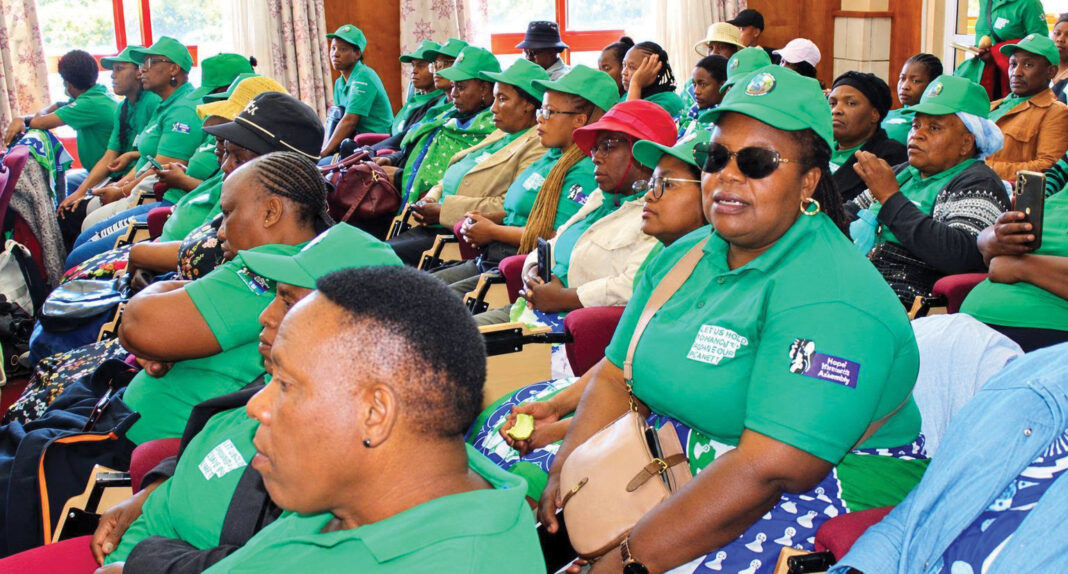
The call was made during recent commemorations of the International Day of Rural Women and World Food Day, where members of Hope for Rural Women’s Assembly Lesotho reflected on the challenges facing rural women, their achievements and the need to improve their livelihoods.
According to the organisation’s secretary-general, Mamalefetsane Phakoe, the two commemorative days hold great significance because, despite efforts to promote food security, some people still go to bed hungry.
“Rural women are the ones who ensure that there is food in the home and that meals are balanced,” Phakoe said.
She explained that the organisation commemorates rather than celebrates the two days, as hunger remains a reality for many households.
On the International Day of Rural Women, however, she said rural women were commemorating the occasion with their heads held high, recognising their contribution to their families and communities.
Phakoe further highlighted the disparities between rural and urban areas, noting that many developments and opportunities available in towns remain inaccessible to people living in villages.
She called for increased development in rural communities to reduce the concentration of people in urban areas and ensure that rural residents also benefit from essential services and opportunities.
“We commemorate the day by reflecting on everyday life, the challenges we face and our achievements,” she said.
Hope for Rural Women’s Assembly Treasurer, Mpati Kukame, said the organisation focuses on several issues affecting rural communities, including climate change, nutrition, gender equality, environmental conservation and the protection of natural resources.
Speaking about gender equality, Kukame, who comes from Ha Leboea in the Botha-Bothe district, said the organisation conducts community education on abuse and establishes support groups to help women address challenges affecting their lives.
She said GBV remains a serious concern in rural areas, where women face circumstances that differ from those experienced by their counterparts in towns.
“We work on issues surrounding gender-based violence, but we also highlight what village women face compared with women in towns because their experiences are different,” Kukame indicated.
She explained that awareness campaigns and information about laws intended to protect and empower women are often more accessible in urban areas, leaving many rural women unaware of their rights.
According to Kukame, this lack of knowledge can make it difficult for women to report abuse or seek assistance.
“Knowledge does not reach them, and reporting abuse becomes stressful,” she pointed out
She also raised concerns about the limited availability of specialised police services in rural areas, including Child and Gender Protection Unit (CGPU) offices.
Kukame said that, unlike in towns, where such services may be more accessible, women in villages often struggle to find appropriate assistance. She added that some women are reportedly told by police to return home and resolve their problems with their spouses.
The lack of safe homes for survivors of gender-based violence further compounds the problem, leaving women with few options when they need to escape abusive situations.
“We have endured abuse because of lack of knowledge, which contributes to a continuing cycle of gender-based violence in villages,” Kukame noted.
Manteboheng Kheo, from Ha Setho, echoed Kukame’s concerns, saying women need knowledge and awareness to understand their rights and challenge beliefs that strengthen their dependence on men.
She said some women grow up believing that they must remain subordinate to their partners, with little understanding of their own rights and independence.
Kheo shared her personal experience, recalling how she once bought a cow for her family but registered it in her husband’s name because she did not understand the implications of doing so.
“When I bought a cow for my family, I registered it in my husband’s name. I did not know that this was a result of a lack of knowledge,” she recounted.
She explained that traditional interpretations of the Lerotholi Laws, particularly the belief that a man is the head of the household, continue to influence the lives of women in rural communities.
Such experiences reflect the realities of many village women, who may lack the information needed to make informed decisions about their property, rights and relationships.
Kukame stated that Hope for Rural Women’s Assembly has introduced healing cycles within different groups to address gender inequality and help women work through difficult experiences.
Through these initiatives, the organisation has trained more than 100 women, providing spaces where they can share their experiences, learn from one another and build confidence.
For ‘Masetŝabelo Chaka, from Ha Pokane in the Botha-Bothe district, the platform has provided a safe environment in which she can speak openly about issues she previously found difficult to discuss.
Chaka said she had been afraid to express her thoughts, but participating in the group helped her feel safe enough to share her experiences.
She recalled how her husband used to dictate what she wore, including discouraging her from wearing trousers. He would also object to her wearing hairpieces, claiming that doing so went against the will of God.
“From the healing cycle, I believed it was easier to approach him,” Chaka added.
Deputy Speaker of the National Assembly, Tšepang Tšita-Mosena, said issues affecting rural women needed to be addressed through parliamentary committees and women’s caucuses.
Tšita-Mosena emphasised that rural women were important stakeholders whose concerns deserved attention in national discussions and decision-making processes.
She said the country needed to take food security seriously, stressing that the issue was not simply about producing or having food, but ensuring access to safe and nutritious food.
For Hope for Rural Women’s Assembly, commemoration of the International Day of Rural Women and World Food Day was therefore an opportunity to reflect on both progress and the work that remains.
Hope for Rural Women’s Assembly Lesotho committee member Mathabiso Khachale spoke about land champions, saying that the organisation also protects the land rights of women and children.
Khachale said that it is difficult for women in rural areas to access land, especially widows, because traditionally, they had to go through their fathers.
She revealed that women are often excluded from decisions about grazing land and have little say in land-related matters.
“Therefore, we travel to villages to educate people about land laws, emphasising the importance of having the correct documents. Women in rural areas are unaware of their rights when it comes to land.”
Khachale also indicated that without land, women are unable to meet their basic needs and provide food for their families.