
By Tapera Chikuvira
Vast tracts of land in the Qhalasi area of Mohale’s Hoek district look barren and sad.
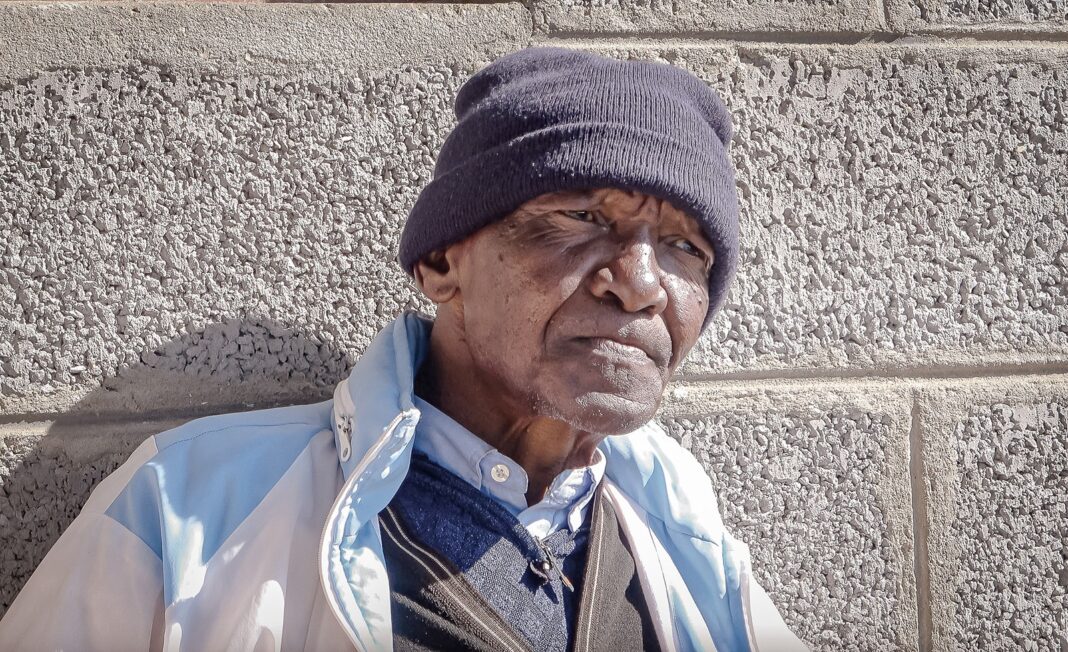
Area chief, Chabeli Moeketsi shakes his head dejectedly pointing at the fields yonder, as if he is looking for answers.
He despairingly narrates that scores of his people have abandoned farming which they’ve relied on for their survival since time immemorial following poor harvests in the past four years or so. They have watched helplessly as changing weather patterns ravaged their fields.
Some left to look for menial jobs in neighbouring South Africa; women are engaged as house maids while the men try everything, including working as illegal miners – known as Zama zama – in disused mines under very dangerous situations.
Not all men who join the great trek to look for gold in the bellies of abandoned mines in South Africa are lucky to live to tell their tales.
At least 32 Basotho suspected illegal miners recently perished when they were trapped at a closed mine in Welkom, Free State.
They are believed to have died on 18 May 2023 in a gas explosion after one of them reportedly tried to light a cigarette. Three bodies have been brought to the surface by two other illegal miners who survived the incident while 27 are still to be reprieved and repatriated back home for burial.
South African authorities say the high methane gas underground makes a search impossible and dangerous.
“Then situation is pretty bad,” Chief Moeketsi says.
“It was never like this in the past,” he tells theReporter as he explains the poverty gnawing the area following poor harvests this past season. Some farmers did not get anything at all.
A few had tried to move away from the traditional maize crop in an effort to adapt to climate changes by planting drought resistant mabele, sorghum, and beans but harvests were poor after the crops were attacked by birds.
Chief Moeketsi, aged 62, also vividly recalls like it happened yesterday, how strong winds destroyed their crops and blew off roof tops of some villagers’ houses.
“Life has not been the same for most people since then. They’re struggling to repair their damaged homes,” he says.
Hopeless and with nothing to do, the youth in the area spend their days basking in the sun as they face the temptation of indulging in crime and other social vices such as using drugs.
For the girls, early pregnancy or marriage is a sad reality, he adds resignedly.
A local farmer, Mokhele Thulo, is equally devasted.
The 70-year-old says heavy rains and hail destroyed their plants as they were sprouting up.
“It’s a huge loss.
“We just have to wait until the next season. There’s nothing we can do,” he says.
Thulo, who also runs a poultry project, says farmers in the area have not had any meaningful harvests in the past four years or so due to heavy rains.
The farmers are aware of changes in climate but unfortunately, they can’t move to other crops because of their type of soil which is only suitable for maize.
“It’s suitable for particular crops like maize; we’ve to stick to crops that do well in this area and pray that the weather will be favourable next season,” Thulo points out.
He also notes that the few who harvested something are struggling to fend off thieves who pounce on their fields to steal maize.
Most families used to be able to feed themselves and keep reserves for dry seasons, but not anymore. This has seen some villagers stealing from others as they try to survive adject hunger and poverty.
“We had good harvests and bad harvests but we survived,” Thulo says.
Chaba-se-oele Makhalemele and his wife ‘Masekhoane are in the same boat. They did not harvest anything.
The Qhalasi villagers are part of the about 80 percent of the country’s 2.2 million people that rely on subsistence farming but are staring hunger in the face.
According to the World Food Programme (WFP) Lesotho Annual Country Report, the food security situation in Lesotho deteriorated in 2022.
The report says the number of food insecure people will rise due to three consecutive years of drought, the socio-economic impacts of COVID-19, the global food crisis, heavy rains during the planting season affecting production, and decreased income from livestock and related product sales.
In response to the sharp deterioration in food security, WFP scaled up operations and provided food assistance and cash-based transfers to 58,000 people (52 percent women), including households headed by children, women, the elderly, and people with disabilities, in the three districts of Mokhotlong, Thaba-tseka, and Berea. These recorded the highest food gaps.
WFP also provided technical assistance to the government in the planning and implementation of gender-responsive social protection programmes (school feeding and public works) that contribute to hunger eradication and long-term food and nutrition security.
The global organisaton also supported 15,000 people as part of the integrated resilience programmes in 21 project sites across Mafeteng, Mohale’s Hoek and Quthing districts.
It further gave smallholder farmers in these area training in marketing, post-harvest management, nutrition, and gender mainstreaming.
According to the Global Hunger Report (2022), Lesotho recorded a Global Hunger Index score of 32.4 which shows the country is seriously food insecure.
It is vulnerable to disasters, particularly floods, drought, and disease outbreaks. Chronic food insecurity, low agricultural productivity, poverty, malnutrition, and the impact of HIV/AIDS compounds vulnerability to natural hazards, the report says.
The HIV/AIDS prevalence rate is high among adults (22.7 percent), and higher among women (27.4 percent) than among men (17.8 percent), says the 2020 Lesotho population-based HIV impact assessment.
Women and girls are the most vulnerable to HIV and have the least access to adequate food, income and land.
The National Strategic Development Plan (NSDP II) (2018/19 -2022/23) also states that the country is experiencing a triple burden of malnutrition: under and over nutrition, and micronutrient deficiency, across all age groups. Stunting or chronic malnutrition level is high at 34.5 percent among children under the age of five years while the prevalence of obesity is 6.6 percent and overweight is 11 percent.
The underlying factors include poverty, natural and man-made disasters, low consumer demand and purchasing power for nutritious food, and undiversified and low agricultural productivity.
The 2018 Zero Hunger Strategic Review Report reveals that food security conditions in Lesotho are not improving and a large part of the population remains exposed to chronic and irreversible food insecurity, especially in rural areas.
The government says it is committed to food security and nutrition with the agriculture sector as one of the key priority sectors in National Strategic Development Plan (NSDP) II.
The plan outlines the development of local food systems, agricultural value chains, and supplier development systems, to create opportunities for women, youth and other groups to aid national efforts to improve livelihoods and create jobs for smallholders or small-scale producers.
However, due to limited production capacity, overdependence on rain-fed agriculture, market underdevelopment, and low investments in the sector, the operations are at a small scale, with many at subsistence and smallholder farmer level.
As a result, there is limited capacity in the sector to scale production and mitigate rising food prices. The Integrated Food Security Phase Classification (IPC) forecast for the 2022/2023 lean season indicates that 521,000 people (61 percent in rural areas and 39 percent in urban areas) are food-insecure (in IPC phase 3), compared to 470,000 in 2021/2022.
The WFP report indicates that sources of livelihoods (casual agricultural labour, agricultural sales, beer brewing, petty trade, service wages, livestock sales etc.) remained slightly lower than normal.
The countrywide heavy rains resulted in water logging and prevented key agricultural practices such as weeding; therefore, also reducing resultant income, it says.
It adds that the economy has not recovered from the effects of the COVID-19 pandemic. On the other hand, prices of food remain high, coupled with unstable income opportunities and low purchasing power, especially among poorer households. The crisis in Ukraine has also exacerbated the high global food and fertilisers prices.
Chief Moeketsi says they need help. Fast.
Although he appreciates the assistance to some farmers in the district by non-governmental organisations such as WFP, his area has not been covered.
“We also need urgent help,” he pleads in a muffled voice depicting desperation.
As we reluctantly drive away from Qhalasi on the bumpy gravel road to join the main tar back to Maseru, I look back at the abandoned sun-baked fields as they sit there calmly and silently, dreaming of their future.