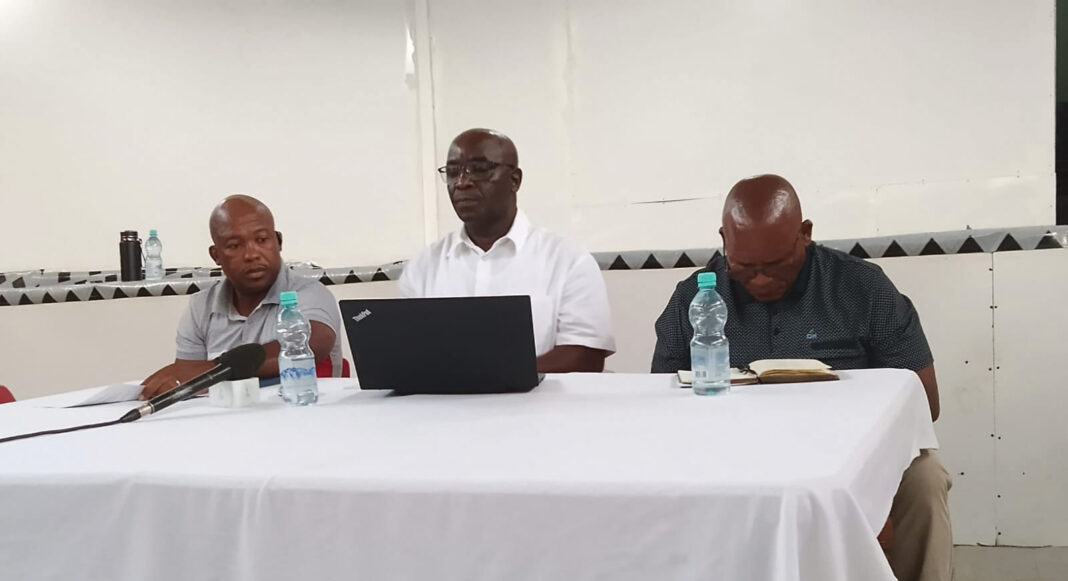

The Association of Private Security Companies Lesotho (APSC) has condemned what it describes as widespread exploitation and abuse of security guards by some company owners.
The association said many security guards work under harsh conditions, standing in the cold and rain throughout the night to protect homes, businesses and institutions, yet go unpaid for months with no explanations or accountability from their employers.
One of the affected security guards, Thabo Lesaoana, told the Reporter that they perform dangerous duties but are treated “like useless objects”.
“From the uniform alone, you can see that these companies do not care about their workers. They make a lot of money from our lives, yet they do not care about us at all,” Lesaoana said.
He noted that some companies deploy guards without providing any means of self-defence. “They are not even given firearms, yet they are expected to guard valuable property.”
Lesaoana encouraged security guards needed to stand up and fight for their rights, including the enforcement of the legal minimum wage.
“We need a minimum wage of M3,300. Imagine earning M1,600. What can you do with that when everything is so expensive — rent, food and school fees all have to be paid?” he asked.
Speaking at a press briefing this week following complaints circulating on social media, APSC president, Thabo Mike Nkuatsana, strongly criticised the alleged mistreatment of workers.
He acknowledged that some private security company owners do not treat their employees fairly or pay them on time.
Nkuatsana added that the Private Security Officers Board had taken action against those involved in misconduct. However, some of the complaints could be coming from illegally operating guards who are not licensed.
The Private Security Officers Board, established under the Private Security Officers Act of 2002, is mandated to regulate the industry, issue licenses and revoke them where necessary, he explained.
According to the Act, both companies and individual guards must be licensed before operating.
Nkuatsana also raised concerns about high licensing fees, saying the annual license fee had increased from M1,000 to M5,000 without clear explanation.
“This is expensive compared to other industries that generate more income but pay far less for licenses. This issue needs to be reviewed, otherwise there will never be stability in the sector,” he stated.
He further indicated that workers’ salaries are regulated by the Wages Advisory Board, but the private security industry has no representation on it.
APSC member, Teboho Molapo, said wages often depend on what clients are willing to pay.
“Sometimes workers are paid through incentives such as coffee. It is a tough industry,” he said.