
By Neo Kolane
The Central Bank of Lesotho (CBL) Monetary Policy Committee (MPC) says international, regional and domestic economic developments and financial market conditions have been negatively affected by the Russia-Ukraine war.
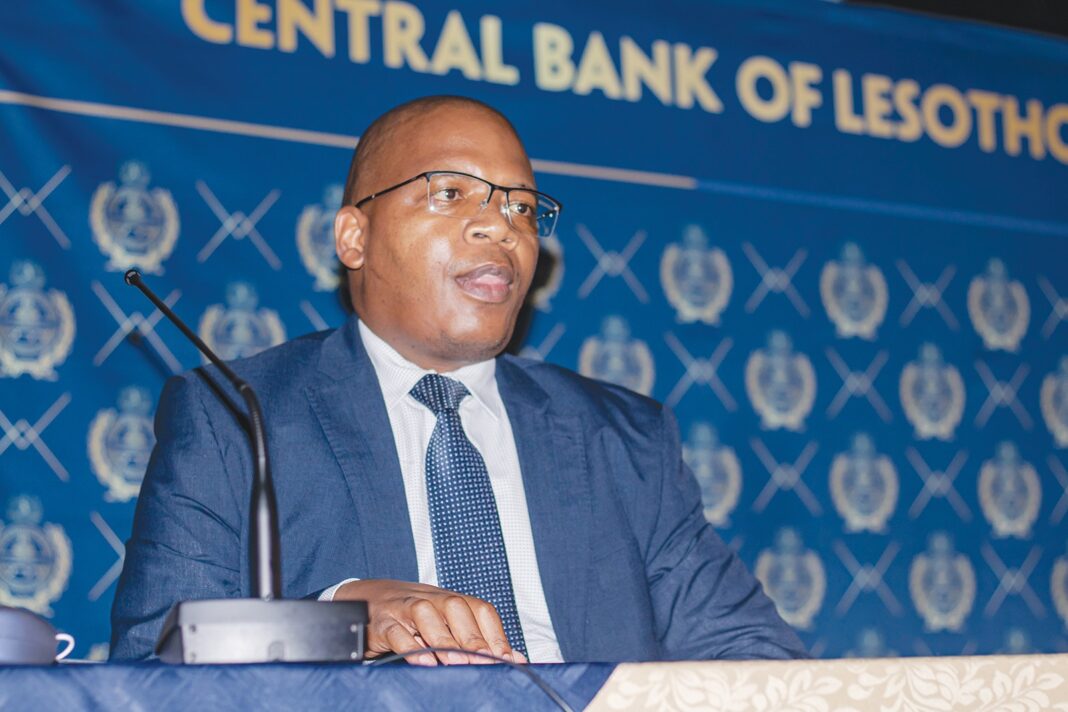
This was disclosed by acting CBL governor Lehlomela Mohapi at a press conference this week, where he said the developments and conditions were deliberated to determine the appropriate monetary policy action to maintain price stability and thus promote broader macro-economic stability.
Mohapi noted that the conflict between Russia and Ukraine is the culmination of simmering geo-political tensions and is expected to worsen the global macro-economic environment.
He said the war came at a turning point where global economic recovery was gaining traction amid growing inflationary pressures and is likely to further heighten inflation mainly through higher energy and food prices.
He also explained that the global economy displayed mixed signals during the last quarter of 2021 with some economies showing signs of recovery while others remained subdued.
“On the one hand, advanced economies registered strong growth following strong consumption demand coupled with progress in vaccination roll-out programmes.
“On the other hand, growth in emerging market economies was slower due to COVID-19 and global value chain disruption.
“Indicators are that monetary policy in many regions is tightening while most central banks began to gradually increase their policy rates amid growing inflationary pressures, some left key policy rates uncharged to support growth,” Mohapi explained.
The global financial market indicators displayed mixed signals. Mohapi added, while short-term yields generally rose in both advanced and emerging economies and, yields in the long end of the market remained muted.
He went to say that during the review period, foreigners were net buyers of South African equity and bonds.
He indicated that the South African rand is expected to weaken during the second quarter of 2022, which indicates that the current strong demands for rand will be short lived.
When addressing the domestic economic activity as measured by the Quarterly Indicators of Economic Activity, Mohapi said it was estimated to have improved in the fourth quarter of 2021.
“This was at the back of improvements in both supply and demand sides of the economy, with the demand side of the economy benefiting from further relaxation of COVID-19 restrictions as vaccination roll-out intensifies.
“The supply side of the economy was boosted by higher imports of intermediate goods and higher exports to the United States of America,” he said.
He was adamant that the domestic labour market conditions deteriorated during the fourth quarter of 2021 with job losses in some sectors of the economy.
With regard to domestic price developments, he suggested inflationary pressures remained elevated in February 2022.
“The domestic inflation rate, as measured by the year-on-year percentage change in the consumer price index, declined slightly from 7.6 per cent in January to 7.5 per cent in February 2022,” Mohapi said.
An MPC statement says the broad measure of money supply (M2) fell by 3.3 per cent in January 2022 compared to a rise of 9.1 per cent in December.
The fall was due to a 27.2 per cent decline in net domestic assets, which was moderated by a growth in net foreign assets.
The statement continued that in January 2022, private sector credit recorded a modest growth of 0.6 percent decline of 1.0 per cent in the previous month.
“Private sector credit was supported by a rebound in credit extended to the business enterprises while household credit growth remained unchanged between December 2021 and January 2022.
“In summary, the global macroeconomic environment somewhat worsened partly due to the on-going Russia-Ukraine war with elevated inflationary pressures,” the statement said.